What Protein Snacks Should Gyms Sell at the Front Desk?
Kort sammanfattat
The best protein snacks for gyms are shelf-stable, single-serve grab-and-go formats: protein bars, protein bites and savoury protein chips, plus ready-to-drink shakes where you have chilled space. Prioritise clean labels, honest protein per serving, broad dietary coverage and impulse-friendly pricing over any single hero product.
TL;DR
- Stock a tight, ambient, single-serve range covering recovery, everyday and savoury needs at an impulse price, with clean labels and a private-label path.
The best protein snacks for gyms to sell at the front desk are shelf-stable, single-serve formats a member can grab, pay for and eat within minutes: protein bars, protein bites and better-for-you savoury options such as protein chips, alongside ready-to-drink protein shakes where you have chilled space. For a buyer, the decision is less about one hero product and more about assembling a tight, high-rotation range with clean labels, honest protein per serving, broad dietary coverage and impulse-friendly pricing.
This guide is written for the person doing the stocking, a gym owner, category manager or distributor, not the end consumer. It covers how the front-desk shelf behaves, the criteria that separate a snack that sells from one that gathers dust, and a checklist you can take into your next supplier conversation.
Why the gym front desk is a different retail problem
A front desk is not a health-food aisle. It is a small, high-traffic impulse zone with almost no shelf, no basket and a customer who is either arriving in a hurry or leaving tired, hungry and slightly euphoric. The member is not comparing twelve SKUs; they are making a two-second decision at eye level with their card already out.
The constraints follow. Space is a single shelf or counter rack, not linear metres. Most gyms have limited or no chilled storage, which pushes the core range toward ambient, grab-and-go products. Turnover has to be quick, and desk staff are not trained retailers, so anything that needs explaining will underperform. The winning range respects all of those limits at once.
What buyers really mean by "best protein snacks for gyms"
When category managers ask for the best protein snacks for gyms, they are rarely asking for a single product. They are asking how to cover the range of member needs with the fewest possible SKUs. A gym crowd is not homogeneous: some want genuine post-workout recovery, some want a portable mini-meal, and some just want a lower-sugar treat that feels aligned with why they are there.
That is why the intent behind searches for high protein foods matters more than any one flavour. A strong front-desk range spans three jobs: a substantial recovery option (higher protein, more calories), a light everyday option (moderate protein, low sugar), and at least one savoury alternative for people who do not want anything sweet. Cover those and you have answered most of the demand walking past the desk.
A buyer's decision framework
Before evaluating any specific product, fix the criteria you will judge every candidate against. A disciplined framework stops you over-indexing on flavour samples and keeps the range commercially honest.
- Protein-to-calorie ratio. A snack marketed on protein should earn the claim. Look at grams of protein against total calories, not the front-of-pack number in isolation.
- Sugar and sweetener profile. Gym shoppers are usually sugar-aware. Favour products where sugar is low and the sweetening approach is clearly labelled.
- Ingredient clarity. Short, recognisable ingredient lists build trust and are easier for desk staff to stand behind. Long additive lists are friction at the till.
- Dietary breadth. Vegan and gluten-free options widen the audience without adding SKUs if one product already covers several needs.
- Format durability. The product has to survive a gym bag, a hot car and a locker. Fragile or melt-prone formats generate waste and complaints.
- Price and margin. Impulse price points have a ceiling. The item must clear it for the member while leaving the gym a healthy margin.
- Supply reliability. Consistent availability, sensible order quantities and dependable lead times beat a standout flavour you cannot restock.
The best front-desk range is not the most exciting one; it is the smallest set of SKUs that reliably covers recovery, everyday and savoury needs at an impulse price.
The formats worth stocking, and their trade-offs
No single format wins every job. The strongest front-desk ranges blend two or three of the following, each chosen for a specific member need.
Protein bars
Protein bars are the default front-desk workhorse, and the demand behind them is transactional: people search for and buy them directly. They are ambient, durable and easy to price for impulse. The trade-off is quality variance, since the category is crowded with products that are effectively confectionery in disguise. A tight edit of one or two genuinely high-protein, lower-sugar bars usually outperforms a wall of similar options.
Protein bites and natural bites
Bite-format snacks suit members who want something smaller than a full bar or a cleaner, whole-food feel. Protein bites deliver a recovery hit in a lighter portion, while natural bites lean on simple ingredients for the everyday, lower-commitment purchase. Both merchandise neatly in a counter rack. SwedeVital produces protein bites and natural bites here, useful when you want the recovery and everyday jobs covered without adding many SKUs.
Protein chips and savoury options
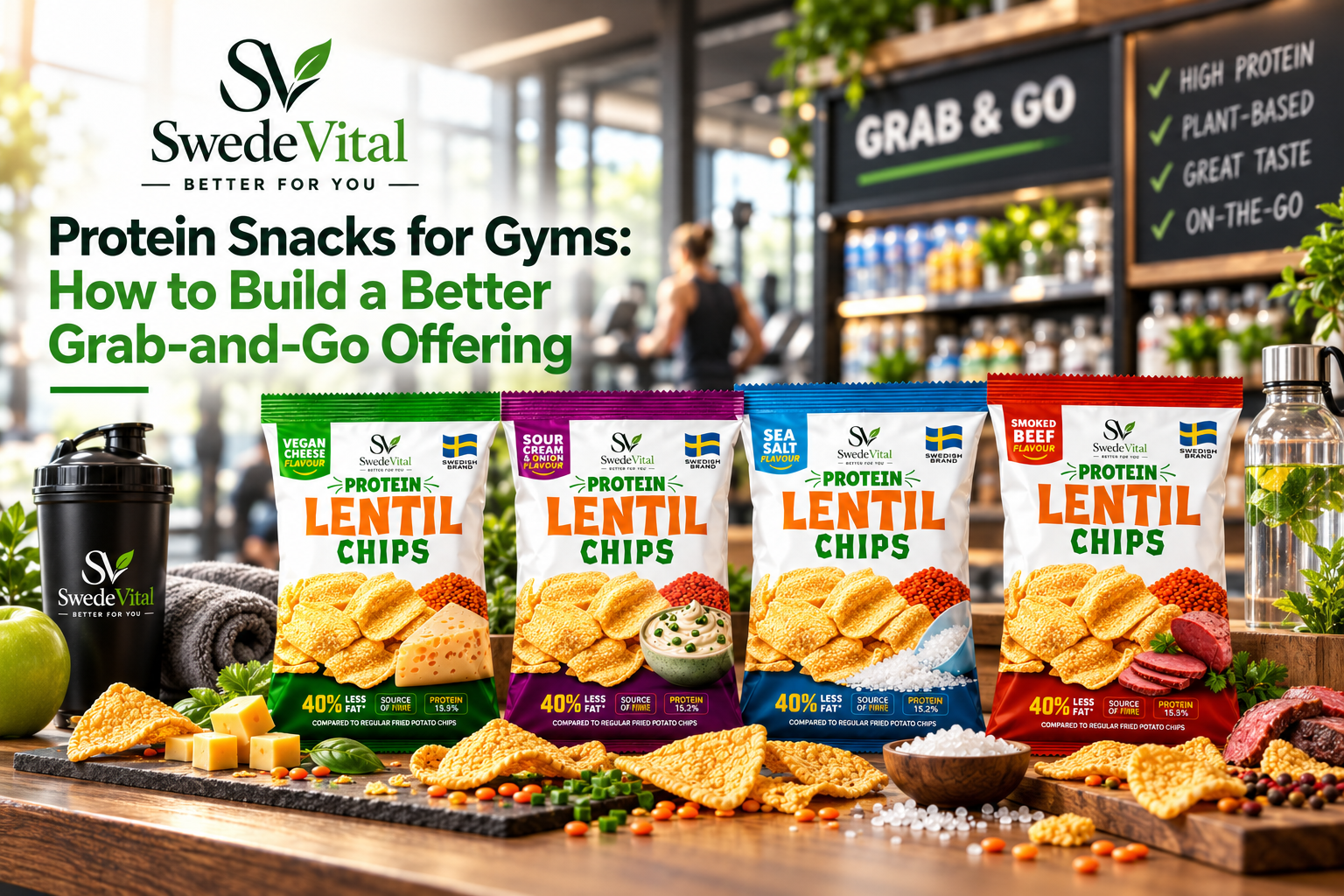
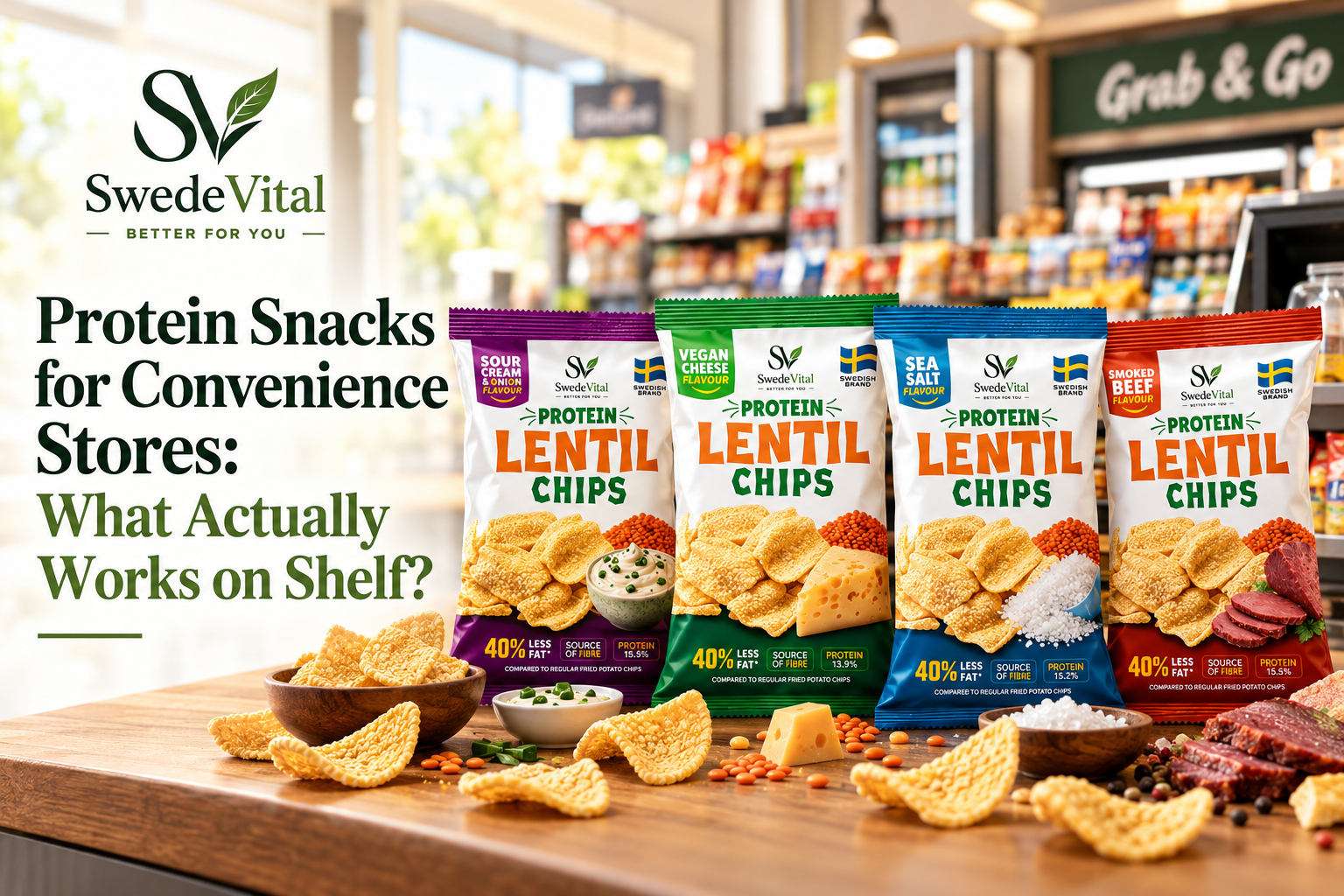
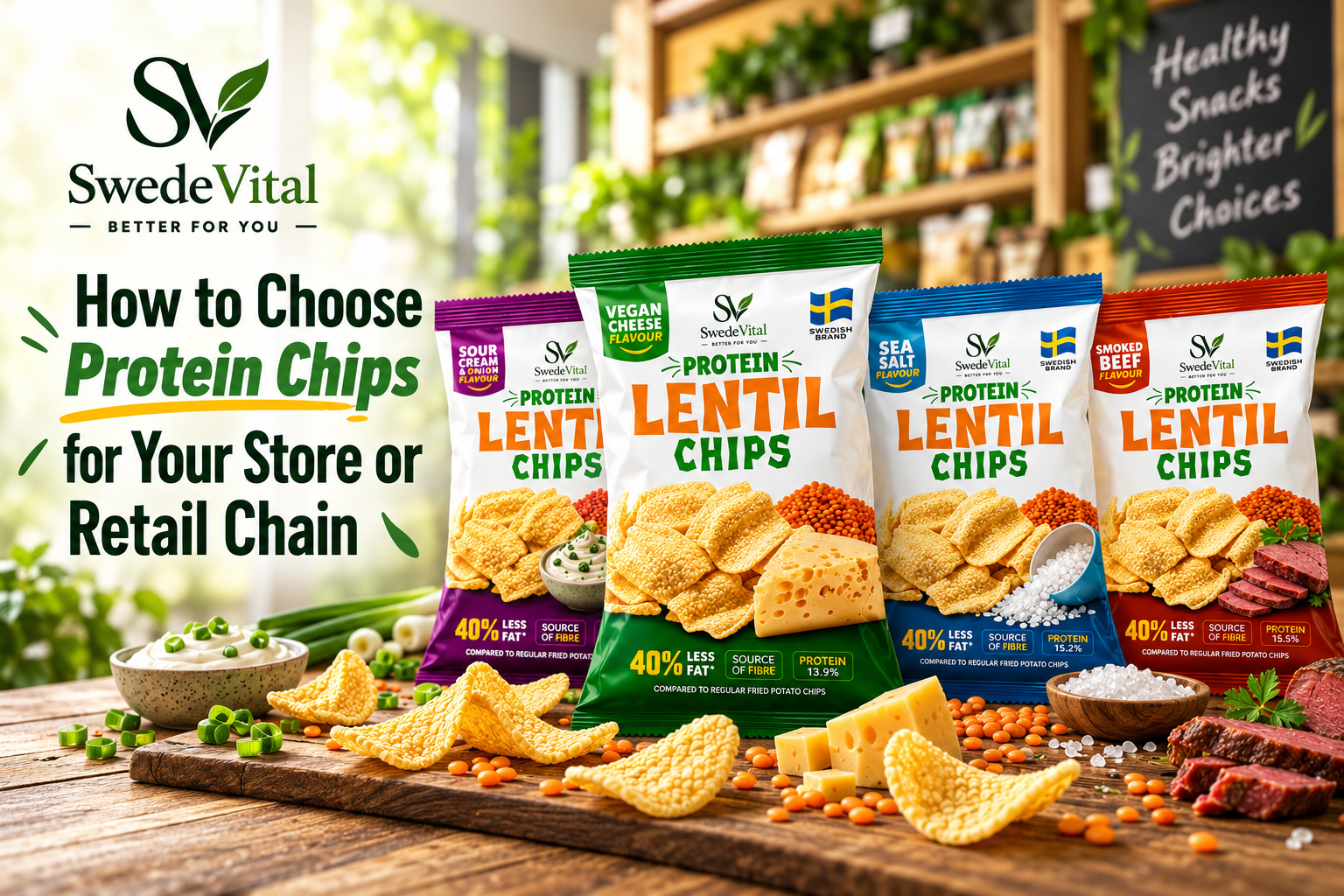
Savoury is the most under-served slot at most front desks. A meaningful share of members do not want anything sweet after training, and protein lentil chips answer that directly while reading as a genuinely better-for-you snack rather than a treat. One savoury option is often the quickest way to broaden appeal beyond the sweet-snack shopper.
Ready-to-drink protein shakes
Protein shakes carry strong, buyable demand, and a chilled bottle is an easy post-workout grab. The catch is infrastructure: they need reliable chilled space and tighter date management, and they occupy more room per serving than dry snacks. If you have a fridge at the desk, one or two shakes round out the range; if you do not, keep the core range ambient and treat shakes as an optional extension.
How to read a label like a category manager
Members are getting better at reading labels, so buyers have to be better still. Do not take front-of-pack claims at face value; turn the pack over and judge the same few things every time.
- Protein per serving, not per 100g. Per-100g figures can flatter small packs. Check what the member actually gets per unit they buy.
- Protein source. Note whether it is plant or dairy based, which matters for vegan shoppers and people avoiding lactose.
- Sugar and sweeteners. Look at total sugars and how any sweetness is achieved, then decide whether it fits a gym audience.
- Ingredient length. Shorter, recognisable lists are easier to sell and align with what "healthy snacks" shoppers expect.
- Claims discipline. Treat health framing carefully. Protein may support recovery and satiety, and research suggests adequate protein helps maintain muscle, but no snack guarantees results and your merchandising should not imply it does.
Reading this way protects you twice: it keeps underpowered products off the shelf, and it lets desk staff answer a member's question honestly without overpromising.
Merchandising, margin and the impulse zone
Even the right products underperform if they are merchandised badly, and the front desk rewards ruthless simplicity. Keep the visible range small and well faced so the two-second decision is easy; a crowded rack paradoxically slows purchases. Place the hero recovery item at eye level with the everyday option beside it, and give the savoury alternative its own clear spot so sweet-averse members see it.
Price for impulse, not for a weekly shop. There is a psychological ceiling for a grab-at-the-desk snack, and pricing above it quietly kills rotation regardless of quality. Bundling can lift attach rate, for example pairing a snack with a class booking, but keep any promotion legible to whoever is on the desk. Finally, review sell-through on a simple cadence and cut the slowest SKU rather than expanding endlessly; a few strong products almost always beat a sprawling range.
Branded, private label, or a blend?
Once the range is proven, the question becomes whose name is on the pack. Branded products carry recognition and need no development effort, which suits gyms that want to stock and go. Private label lets a chain or distributor own margin and presentation, turning the front-desk range into part of the brand rather than a third-party display. Most operators land on a blend: a couple of trusted branded lines plus a private-label range for the products they sell most.
This is where sourcing from a manufacturer rather than a reseller pays off. A supplier that makes plant-based protein snacks, from protein lentil chips and protein bites to protein bars, and can support private-label formats lets a buyer start branded and graduate selected lines to own-label as volumes justify it. SwedeVital operates in this space, which matters when you are weighing whether a supplier can grow with you rather than cap you at off-the-shelf SKUs.
A front-desk stocking checklist for the best protein snacks for gyms
Use this as a filter for every candidate before it earns a place on the shelf.
- Does it cover a clear job, recovery, everyday or savoury, that the range is missing?
- Is the protein per serving genuinely meaningful for the calories and the price?
- Is sugar low and the ingredient list short and recognisable?
- Does it survive a gym bag without chilling, or do you have chilled space?
- Is there a vegan or gluten-free option so you are not excluding members?
- Does the impulse price leave a healthy margin while staying under the members' ceiling?
- Can the supplier restock consistently at your order quantities and lead times?
- If it succeeds, is there a private-label path to own the margin later?
Anything that fails two or more of these is usually a distraction; anything that passes them all deserves a trial and a hard look at sell-through weeks later.
Frequently asked questions
What are the best protein snacks to sell at a gym front desk?
Prioritise ambient, single-serve, grab-and-go formats: a higher-protein bar or protein bite for recovery, a lower-sugar everyday option, and at least one savoury choice such as protein chips. Add ready-to-drink protein shakes only if you have chilled space. Coverage across needs beats any single product.
How much protein should a good gym snack have?
There is no universal number, and you should avoid implying one on a shelf. Judge protein against calories and portion size rather than a headline figure, and compare candidates on protein per serving. That is what members searching for high protein foods actually check.
Should a gym stock protein bars or protein shakes at the front desk?
Both have strong, buyable demand but different logistics. Protein bars are ambient, durable and simple to merchandise, so they belong in almost every front-desk range. Protein shakes need chilled space and date management, so add them when you have a fridge, not as a core requirement.
Are protein snacks actually healthy snacks?
It depends on the product. Some sit closer to confectionery than to genuine healthy snacks, so read the label for protein, sugar and ingredient length rather than trusting front-of-pack claims. Protein may support satiety and recovery, but a snack is one part of a diet, not a guaranteed outcome.
Do I need vegan and gluten-free options?
Usually yes. At least one vegan and one gluten-free option widens the audience without necessarily adding many SKUs, since a single well-chosen plant-based product can cover several dietary needs at once. It also stops members walking away because nothing on the shelf fits them.
What margin should a gym expect on front-desk snacks?
Margins vary by market, supplier and whether you buy branded or private label, so a fixed figure would mislead. The practical rule is to set an impulse price members accept without hesitation, then work back to a cost that leaves a healthy margin. Manufacturer sourcing and private label are the clearest levers.
Vanliga frågor
What are the best protein snacks to sell at a gym front desk?
Prioritise ambient, single-serve, grab-and-go formats: a higher-protein bar or protein bite for recovery, a lower-sugar everyday option, and at least one savoury choice such as protein chips. Add ready-to-drink protein shakes only if you have chilled space. Coverage across needs beats any single product.
How much protein should a good gym snack have?
There is no universal number, and you should avoid implying one on a shelf. Judge protein against calories and portion size rather than a headline figure, and compare candidates on protein per serving. That is what members searching for high protein foods actually check.
Should a gym stock protein bars or protein shakes at the front desk?
Both have strong, buyable demand but different logistics. Protein bars are ambient, durable and simple to merchandise, so they belong in almost every front-desk range. Protein shakes need chilled space and date management, so add them when you have a fridge, not as a core requirement.
Are protein snacks actually healthy snacks?
It depends on the product. Some sit closer to confectionery than to genuine healthy snacks, so read the label for protein, sugar and ingredient length rather than trusting front-of-pack claims. Protein may support satiety and recovery, but a snack is one part of a diet, not a guaranteed outcome.
Do I need vegan and gluten-free protein options?
Usually yes. At least one vegan and one gluten-free option widens the audience without necessarily adding many SKUs, since a single well-chosen plant-based product can cover several dietary needs at once. It also stops members walking away because nothing on the shelf fits them.
What margin should a gym expect on front-desk snacks?
Margins vary by market, supplier and whether you buy branded or private label, so a fixed figure would mislead. The practical rule is to set an impulse price members accept without hesitation, then work back to a cost that leaves a healthy margin. Manufacturer sourcing and private label are the clearest levers.