Protein Snacks for Gyms: How to Build a Better Grab-and-Go Offering
Kort sammanfattat
Protein snacks for gyms are an impulse category. The best offer is a small, curated single-serve range covering three post-workout moments, recovery, on-the-go fuel and a considered treat, priced for impulse and merchandised on the exit path rather than a crowded, unfocused shelf.
TL;DR
- Build gym snacking as a tight, tiered single-serve range covering recovery, on-the-go fuel and treats, chosen on real label specs and merchandised at the exit.
Protein snacks for gyms are the impulse category that turns a finished workout into a sale: portable, single-serve, higher-protein formats a member can grab on the way out without breaking stride. For an operator or buyer, the winning offer is not simply more protein bars on a shelf. It is a small, curated range that covers the moments right after training, is priced for impulse, and is merchandised at the point of exit. Get those three things right and the range works harder than a much larger, unfocused assortment.
This guide is for the person deciding what to stock. It covers the formats that move, the label specifications that separate a credible product from a lookalike, a tiered framework for building the range, and a checklist you can hand to a supplier. The nutrition points below are general and evidence-led; verify any specific claim against a supplier's own tested data.
Why protein snacks for gyms earn their shelf space
A gym has something most retail environments would pay dearly for: a captive audience in the exact mindset your products speak to. A member leaving the floor is thinking about recovery, hunger and the effort they just put in. That is a rare window of high intent, and an empty vending machine of crisps and sugary drinks quietly works against the brand the operator is trying to build.
The commercial case is straightforward. Impulse formats carry healthy margins relative to their footprint, a tight range keeps working capital low, and a well-chosen selection reinforces the premium, health-forward positioning that justifies membership pricing. The category rewards curation over breadth: a handful of the right items in the right place beats a crowded shelf nobody can read.
The three moments to stock for
- Immediate recovery — the ready-to-drink shake or the protein bar eaten in the car park within minutes of finishing.
- On-the-go fuel — a savoury or crunchy option that doubles as a light meal replacement for members heading straight to work.
- The considered treat — something that satisfies a craving while still fitting a daily protein or calorie target.
What members actually reach for
Buyer instinct often over-indexes on protein bars because they are familiar and easy to rack. Bars belong in any range, but they are one format among several, and treating them as the whole category leaves demand on the table. Map your assortment against how people genuinely fuel around training.
- Ready-to-drink protein shakes — the strongest immediate-recovery format. Convenient, no mixing, and instantly understood. Chilled placement matters more here than for any other item.
- Protein bars — the shelf-stable workhorse. Long life, easy to merchandise, and forgiving of temperature. The risk is sameness, so differentiate on texture, protein source and cleaner ingredient lists.
- Savoury and crunchy snacks — protein-forward chips, lentil-based crisps and savoury bites answer the member who does not want another sweet bar. This is often the most under-served slot on a gym shelf and a genuine point of difference.
- Bites and mini formats — smaller portions and clean-label natural bites suit the considered-treat moment and appeal to members watching total calories.
A common question is whether a gym should also sell protein powder as tubs. It can work where members buy in bulk, but powder is a considered, planned purchase with a very different buying rhythm to a grab-and-go snack. Keep it separate from the impulse zone and do not let it crowd out the single-serve formats that fund the category.
Reading the label like a buyer
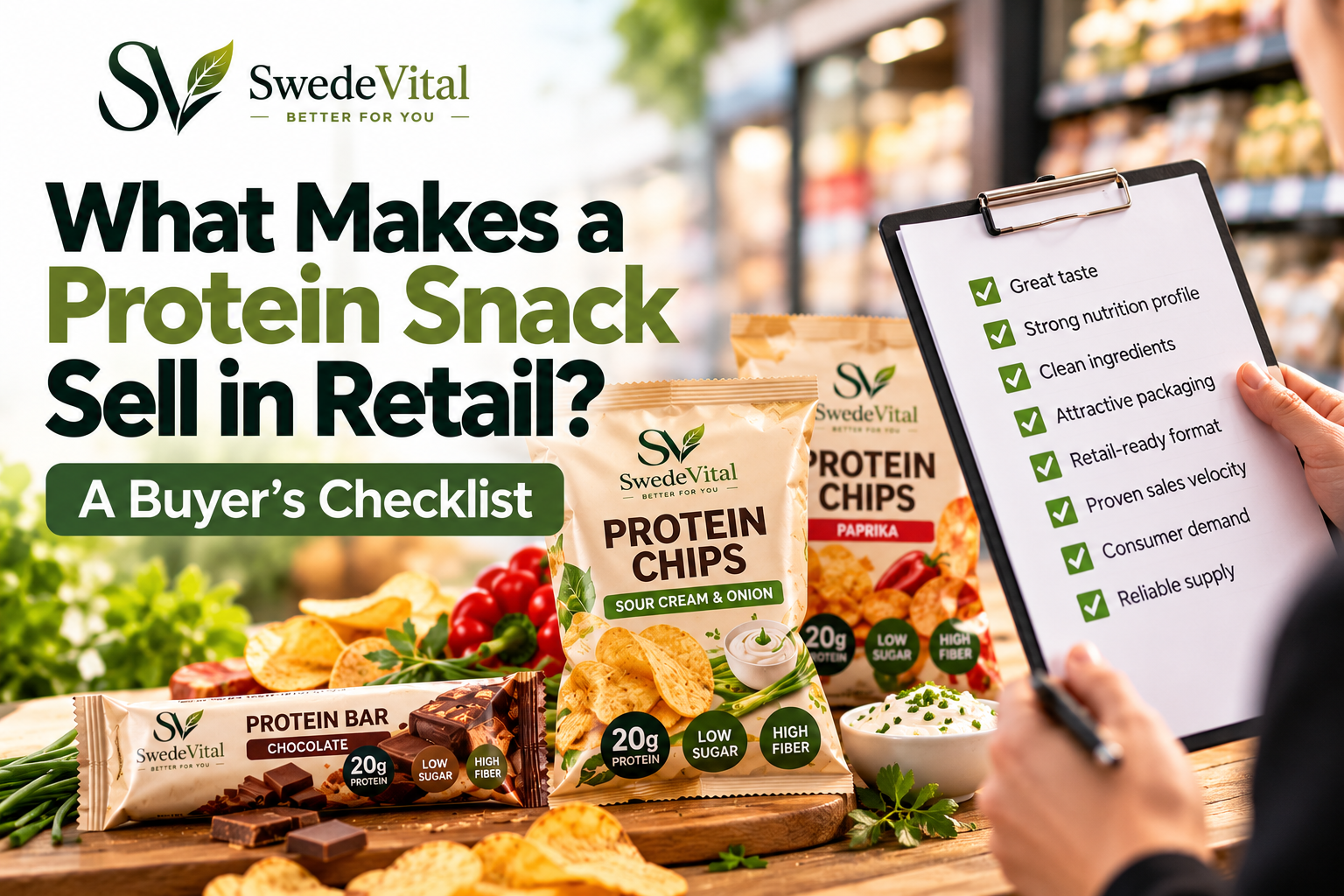
Members increasingly read packs before they buy. A product that photographs well but reads poorly will stall, so assess every candidate against the same specifications rather than marketing copy.
- Protein per serving and per 100g — judge both. Per-serving is what the member sees; per 100g exposes whether the protein claim is real or diluted by a large portion.
- Protein source — whey, plant blends, or single plant proteins each carry different taste, texture and dietary positioning. Plant-based options widen the audience to members avoiding dairy.
- Sugar and sweeteners — lower added sugar is a frequent buyer priority. Note the sweetener system, as it affects both taste and how clean the label reads.
- Ingredient length and recognisability — shorter, recognisable ingredient lists support a premium, better-for-you position. Long additive lists undercut it.
- Dietary flags — vegan, gluten-free, high-fibre and allergen statements decide whether a member can buy at all. Missing flags silently exclude buyers.
- Format and shelf life — shelf-stable simplifies logistics; chilled formats need refrigeration but strongly outperform in the immediate-recovery moment.
A useful rule of thumb: if you cannot explain in one sentence why a product is on your shelf and not its nearest competitor, it probably should not be.
A tiered framework for building the range
Rather than picking items one at a time, build the assortment in tiers. This keeps the SKU count disciplined and ensures every training moment and dietary need is covered without duplication.
Tier 1 — the core (always in stock)
Four to six proven sellers that cannot run out: one or two ready-to-drink shakes, two dependable bars across different flavours or protein sources, and at least one savoury or crunchy option. This tier does the bulk of the volume and defines the shelf.
Tier 2 — the differentiators
Two to four items that give members a reason to look twice: a distinctive savoury snack, a clean-label bite, or a plant-based line that broadens the audience. These protect you from looking like every other gym shelf and lift the perceived quality of the whole set.
Tier 3 — rotation and test slots
One or two slots reserved for seasonal flavours, limited runs or new launches. Rotation gives regulars a reason to re-scan the shelf and gives you low-risk data on what to promote into Tier 1. Review performance on a regular cadence and be willing to cut non-movers quickly.
Merchandising the grab-and-go zone
Placement often decides sell-through more than the product itself. The category is impulse-led, so the physics of the space matter.
- Own the exit path. Position stock where members pass on the way out, ideally near reception or the checkout, at eye level. Recovery snacking peaks in the minutes after training, so meet the member there.
- Chill what should be chilled. Ready-to-drink shakes and any perishable items belong in a visible fridge. A warm shake is a lost sale.
- Price for impulse. Keep single-serve pricing simple and psychologically easy. Round, memorable price points reduce hesitation at the counter.
- Signpost the benefit, not just the brand. Short shelf-talk that names the moment (“post-workout recovery”, “high-protein, low-sugar”) helps a rushing member choose in seconds.
- Keep facings full. Gaps read as neglect and quietly signal the range is not worth buying. A smaller range kept full always beats a larger one with holes.
Sourcing, private label and margin
Once the shape of the range is clear, the sourcing decision follows. Buying established branded lines is the fastest route to a credible shelf and carries built-in recognition. Private label or white label can improve margin and let a gym or retail group put its own identity on the pack, which strengthens loyalty and makes the range harder to price-shop against a supermarket.
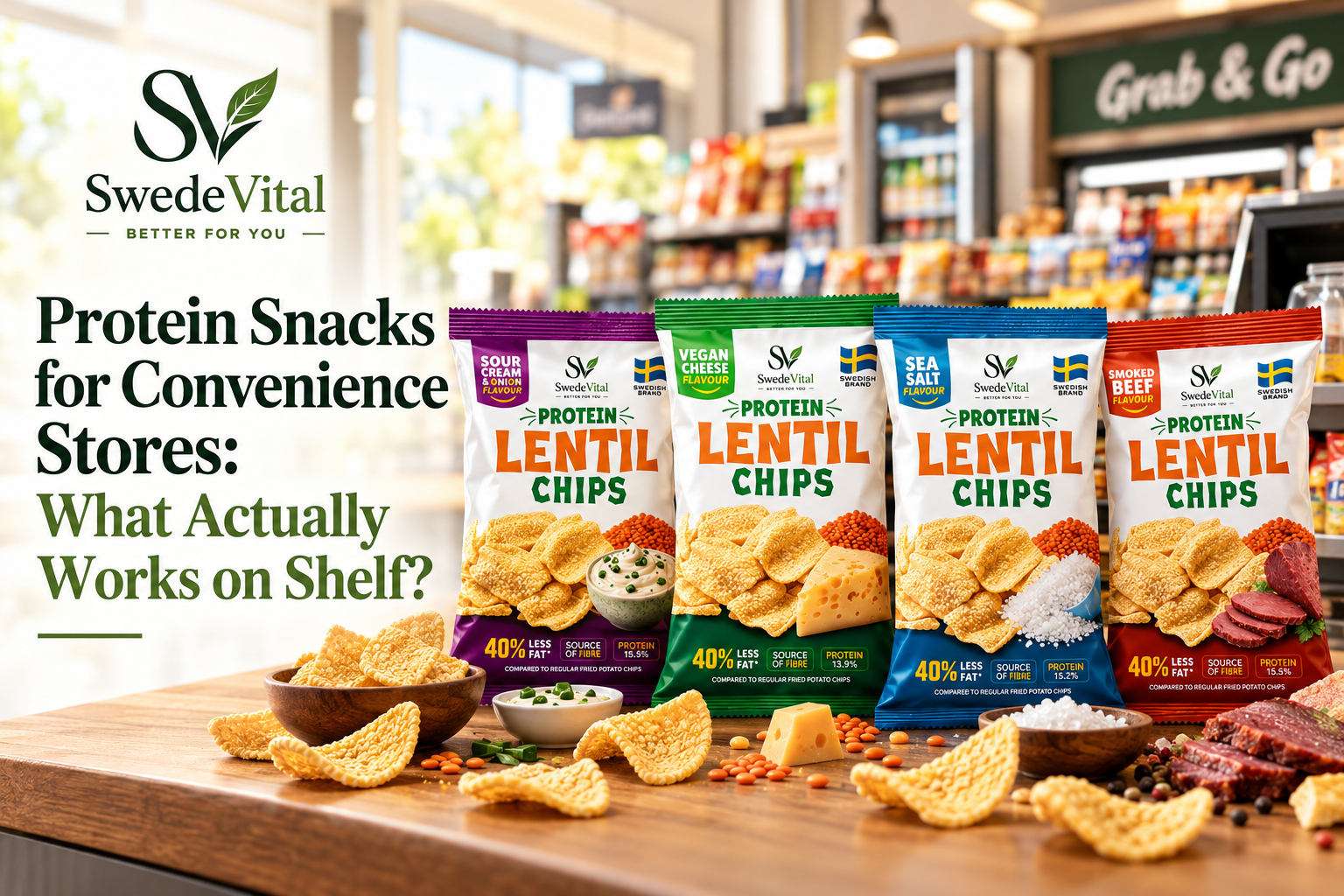
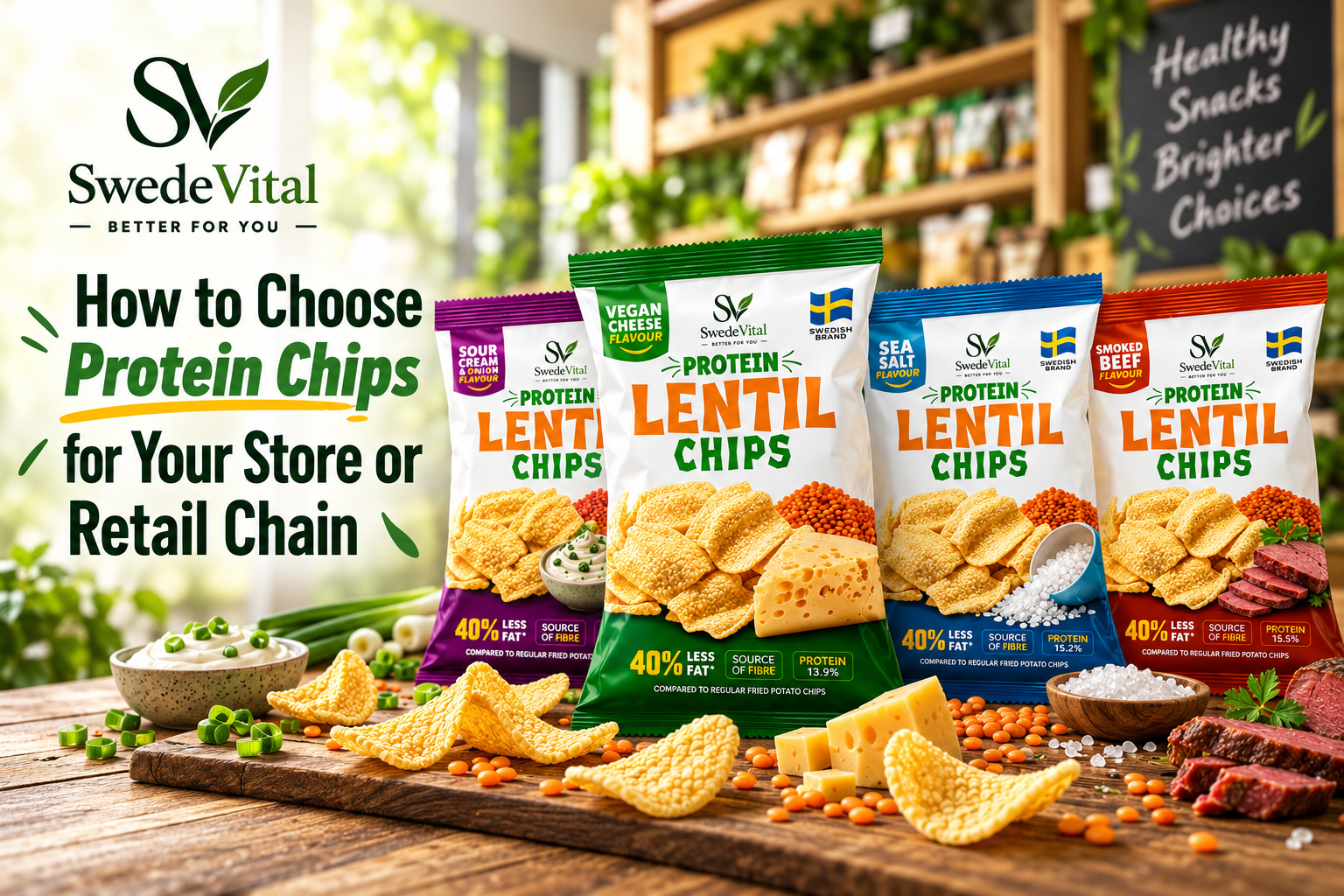
When you evaluate a supplier, look past the sell sheet at the operational realities: batch consistency, ingredient transparency and tested nutrition data, minimum order quantities and lead times, and their ability to support plant-based or allergen-controlled lines. A supplier who can grow a range with you over time is worth more than the lowest unit cost on a single order. As a European manufacturer of plant-based protein snacks, including protein lentil chips, protein bites, natural bites and protein bars, SwedeVital works with retail buyers and private-label partners on exactly this kind of curated grab-and-go assortment, but the framework above applies whoever you source from.
A stocking checklist for protein snacks for gyms
- Have you covered all three moments: immediate recovery, on-the-go fuel and the considered treat?
- Is at least one savoury or crunchy option in the range, not only sweet bars?
- Do you have a chilled ready-to-drink shake positioned in a visible fridge?
- Does the range include a plant-based line to reach dairy-avoiding members?
- Have you compared protein per serving and per 100g across all candidates?
- Is added sugar low and are ingredient lists short and recognisable?
- Are dietary flags (vegan, gluten-free, allergens) clearly stated on pack?
- Is stock placed on the exit path at eye level, with facings kept full?
- Are single-serve prices simple and set for impulse?
- Have you reserved one or two rotation slots and a schedule to review movers?
Frequently asked questions
What are the best protein snacks for gyms to stock first?
Start with a core of four to six proven single-serve formats: one or two ready-to-drink protein shakes, two dependable protein bars across different flavours or protein sources, and at least one savoury or crunchy option. This covers the main post-workout moments while keeping your SKU count and working capital low, then expand into differentiators once you see what moves.
Should a gym sell protein bars, shakes or powder?
Protein bars and ready-to-drink protein shakes are true impulse formats and belong in the grab-and-go zone. Protein powder is a planned, considered purchase with a different buying rhythm, so stock it as a small separate line if members buy in bulk, and do not let it crowd the single-serve snacks that drive impulse sales.
How much protein should a gym snack contain?
There is no single correct number, and it varies by format and portion. Judge protein both per serving and per 100g so a large portion is not masking a modest protein density, and compare candidates on the same basis. Verify figures against the supplier's tested nutrition data rather than relying on front-of-pack claims.
Are plant-based protein snacks worth stocking?
Yes, in most ranges. Plant-based and high-protein foods widen the audience to members avoiding dairy or choosing vegan options, and they support a cleaner-label, premium position. Include at least one plant-based line so you are not silently excluding a growing segment of buyers.
How many products make a good gym snack range?
For most sites, roughly eight to twelve well-chosen SKUs across core, differentiator and rotation tiers strike the balance between choice and clarity. A smaller range kept fully stocked and merchandised on the exit path will typically outperform a larger, gap-ridden shelf that members cannot read at a glance.
Does private label make sense for gym snacks?
It can. Private or white label improves margin and lets a gym or retail group put its own identity on the pack, building loyalty and making the range harder to price-shop against supermarkets. Weigh it against minimum order quantities, lead times and the supplier's ability to guarantee batch consistency and transparent nutrition data.
Vanliga frågor
What are the best protein snacks for gyms to stock first?
Start with a core of four to six proven single-serve formats: one or two ready-to-drink protein shakes, two dependable protein bars across different flavours or protein sources, and at least one savoury or crunchy option. This covers the main post-workout moments while keeping SKU count and working capital low, then expand into differentiators once you see what moves.
Should a gym sell protein bars, shakes or powder?
Protein bars and ready-to-drink protein shakes are true impulse formats and belong in the grab-and-go zone. Protein powder is a planned, considered purchase with a different buying rhythm, so stock it as a small separate line if members buy in bulk, and do not let it crowd the single-serve snacks that drive impulse sales.
How much protein should a gym snack contain?
There is no single correct number, and it varies by format and portion. Judge protein both per serving and per 100g so a large portion is not masking a modest protein density, and compare candidates on the same basis. Verify figures against the supplier's tested nutrition data rather than front-of-pack claims.
Are plant-based protein snacks worth stocking?
Yes, in most ranges. Plant-based and high-protein foods widen the audience to members avoiding dairy or choosing vegan options, and they support a cleaner-label, premium position. Include at least one plant-based line so you are not silently excluding a growing segment of buyers.
How many products make a good gym snack range?
For most sites, roughly eight to twelve well-chosen SKUs across core, differentiator and rotation tiers strike the balance between choice and clarity. A smaller range kept fully stocked and merchandised on the exit path will typically outperform a larger, gap-ridden shelf members cannot read at a glance.
Does private label make sense for gym snacks?
It can. Private or white label improves margin and lets a gym or retail group put its own identity on the pack, building loyalty and making the range harder to price-shop against supermarkets. Weigh it against minimum order quantities, lead times and the supplier's ability to guarantee batch consistency and transparent nutrition data.