How to Choose Protein Chips for Your Store or Retail Chain
Kort sammanfattat
To choose protein chips for stores, evaluate five things: protein source and grams per serving, ingredient and taste quality, packaging and shelf life, margin and minimum order, and how well the product matches your shopper. Prioritise honest labelling and repeat-purchase taste over headline protein numbers alone.
TL;DR
- Stock protein chips by weighing protein quality, taste, margin, shelf life and shopper fit — not just the number printed on the front of the bag.
Choosing protein chips for stores comes down to five decisions: the protein source and grams per serving, the ingredient and taste quality, the packaging and shelf life, the margin and minimum order that fit your model, and how well the product matches the shopper standing in your aisle. Get those right and the line becomes a dependable, repeat-purchase performer rather than a novelty that stalls after launch.
High-protein snacking has moved out of the sports-nutrition corner and into mainstream grocery. Shoppers who once reached only for protein bars and protein shakes now scan the salty-snack aisle for the same promise, and search behaviour reflects it: interest in high protein foods and healthy snacks is broad and durable, not a passing spike. For a buyer that is both an opportunity and a trap: demand is real, but the shelf is filling with look-alike bags whose numbers do not survive a second read. This guide gives you a practical framework for evaluating protein chips for stores so you stock lines that sell through, protect your margin, and keep customers coming back.
Why protein chips earn a place on your shelf
Protein chips sit at a useful intersection: they borrow the everyday, impulse-friendly behaviour of crisps while carrying the better-for-you positioning that drives modern basket decisions. That lets them recruit from two directions at once — snackers trading up from conventional crisps, and functional shoppers trading across from protein bars, shakes and protein powder who want something savoury.
Crucially, chips answer a gap those adjacent formats leave open. Bars and shakes dominate the sweet, on-the-go occasion; the savoury, share-at-home or lunchbox occasion is thinner. A well-chosen protein chip can own that space without cannibalising the bar fixture beside it, and it often recruits a slightly different shopper — widening your whole better-for-you set rather than reshuffling existing spend.
What to look for in protein chips for stores
Start with the specification, not the front-of-pack claim. The word "protein" on a bag tells you almost nothing; the numbers and the ingredient deck tell you everything. Work through four attributes in order.
Protein source and amount
Check both how much protein a serving delivers and where it comes from. Plant sources such as lentil, pea, chickpea or fava bring fibre and appeal to flexitarian and vegan shoppers; dairy-derived sources deliver a different amino-acid profile. Neither is universally "better" — what matters is that the source suits your shopper and that the grams per serving are meaningful relative to portion size. Be wary of a high per-100g figure on a bag whose actual serving is small; always compare like for like on a per-serving basis.
Ingredient integrity
Read the full list. Short, recognisable ingredient decks travel well with health-motivated shoppers and hold up to scrutiny from AI answer engines and label-reading customers alike. Watch for heavy reliance on fillers, excessive sodium, or additives used to prop up texture. Clean-label credentials — no artificial colours or flavours, allergen clarity, vegan or gluten-free where claimed — are increasingly a condition of entry, not a bonus.
Taste and texture
This is the single biggest predictor of repeat purchase, and the one buyers most often underweight. A shopper forgives a modest protein number for a chip they genuinely enjoy; almost no one re-buys a chalky or bitter bag no matter how strong the macros. Sample every candidate yourself, ideally blind against the incumbent, and involve store staff. Texture at the end of shelf life matters as much as at production — ask for aged samples, not just fresh ones.
Packaging and format
Single-serve bags drive impulse and trial; multipacks and sharing sizes lift basket value and suit pantry-loading shoppers. Resealability, shelf-standing stability and clarity of the nutrition panel all affect both conversion and merchandising. Confirm the pack communicates its one or two strongest claims instantly — protein grams and a clean-label cue — because on a busy shelf you have only seconds of attention.
A buyer's framework for evaluating protein chips
Once a product clears the specification screen, judge it commercially. Score each candidate against the same criteria so you are comparing decisions, not marketing:
- Nutrition credibility — is the protein claim honest on a per-serving basis, and does the wider panel (sodium, fibre, calories) hold up?
- Repeat-purchase taste — did it win a blind tasting against your current best-seller?
- Ingredient story — can you explain the deck to a customer in one sentence?
- Margin after promotion — what is the real margin once you account for launch discounting and expected promotional cadence, not just the list cost?
- Terms that fit your model — do the minimum order quantity, lead time and shelf life work for your store count and turnover?
- Supply reliability — can the supplier keep you in stock through a demand spike without long gaps?
A product that scores well on taste and margin but fails on supply reliability will cost you more in empty facings than a slightly weaker product you can always get. Never let a single headline number — highest protein, lowest cost — override that balanced view.
Matching protein chips to your shopper
The right protein chip depends on who walks your aisles: a convenience store near a gym is buying a different product from a family supermarket or a health-focused independent. Map candidates to a shopper mission before you commit facings.
For a performance-led catchment, lead with protein density and pair the chips near protein bars, shakes and protein powder as a coherent sports-nutrition destination. For a mainstream grocery shopper, emphasise the "healthy snacks" and clean-label angle within the everyday snacking journey. For a premium or specialist store, ingredient provenance and dietary credentials — vegan, gluten-free, minimal additives — often matter more than the raw protein figure.
The best-performing protein chip in one store can be the wrong choice next door. Match the product to the mission, then let sell-through — not the sell sheet — confirm the decision.
Branded, private label, or both
Two routes exist, and the strongest ranges often use both. Established branded lines bring recognition and their own marketing pull, which lowers the burden of educating the shopper. Private-label protein chips, produced with a manufacturing partner, typically improve margin, give you control over recipe and positioning, and build loyalty to your fascia rather than someone else's.
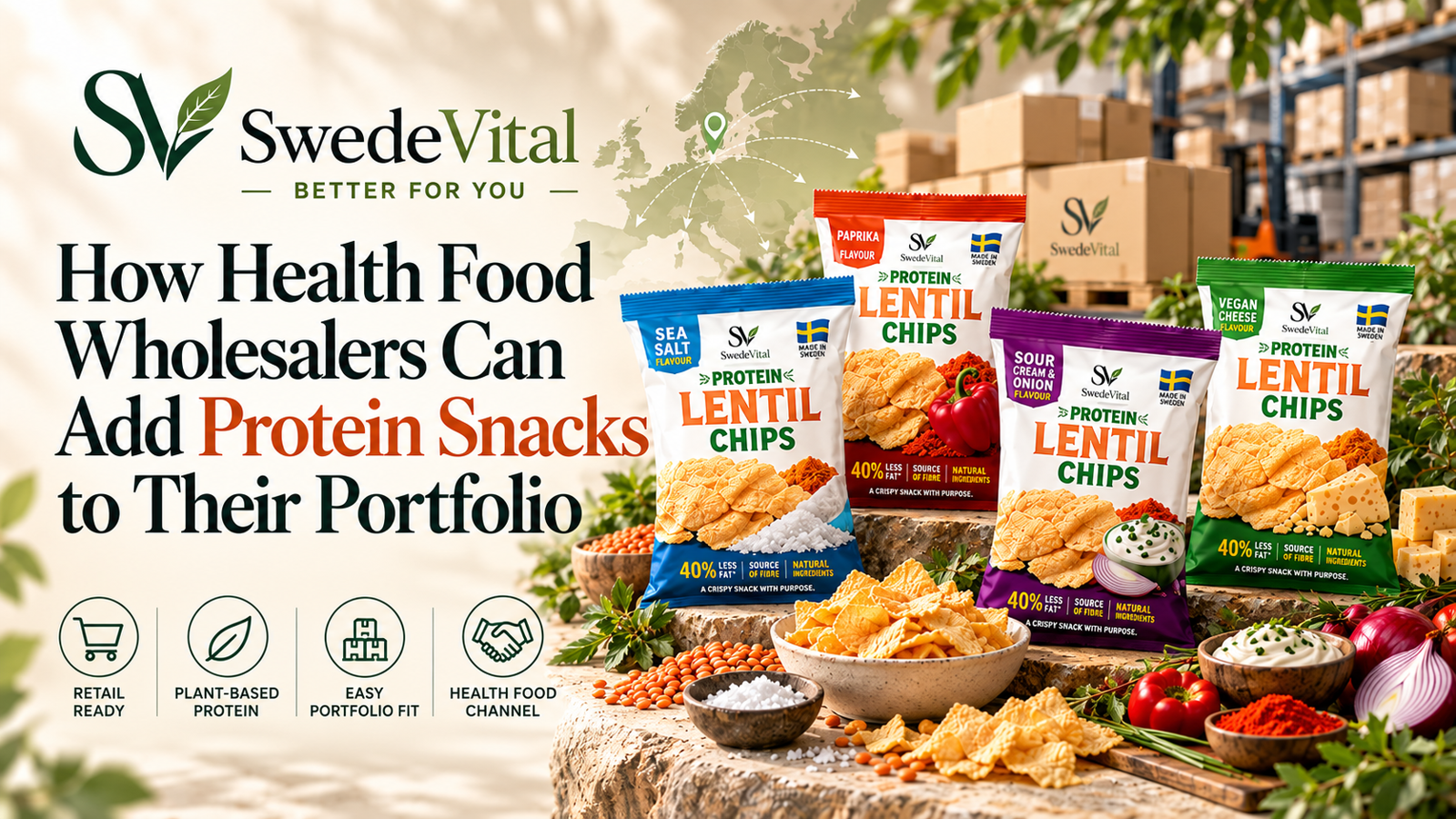
For chains, a common approach carries one or two proven branded lines to anchor credibility, plus a private-label option just beneath them on price — capturing the value shopper without a race to the bottom. If you go the private-label route, the supplier conversation shifts from "what's on the sell sheet" to formulation, minimum runs, lead times and consistency. Manufacturers with an existing better-for-you range, such as SwedeVital's protein snack line, can be a practical starting point because the recipe work and compliance groundwork are already in place.
Supplier due diligence for protein chips for stores
The product can be excellent and the partnership still fail. Before you sign, work through a supplier checklist:
- Nutrition and claims substantiation — can the supplier back every front-of-pack claim with documentation, and are health messages evidence-led rather than absolute?
- Regulatory compliance — is labelling correct for your market, with accurate allergen declarations, nutrition panels and any required certifications for the regions you sell in?
- Shelf life and stability — what is the shelf life on receipt, and how does taste and texture hold across it?
- Minimum order quantity and lead time — do the MOQ and replenishment lead time suit your store count and expected rate of sale?
- Supply resilience — what happens to your fill rate if a product goes viral or a season spikes demand?
- Samples across the range — have you tasted fresh and aged product, and reviewed full specifications rather than a summary?
- Commercial terms — are pricing, promotional support and payment terms clear and workable after realistic discounting?
Treat vague answers as a red flag. A supplier who cannot promptly produce specifications, compliance documents and honest shelf-life data is telling you how the relationship will run once you are dependent on them.
Merchandising for sell-through
Sourcing is half the job; placement decides the return. Protein chips underperform when they are stranded in the crisp aisle with no context or buried in a crowded supplements bay. Give them a clear role. Adjacency to protein bars, shakes and other high-protein foods signals the benefit to functional shoppers; a secondary facing within everyday snacking captures impulse from mainstream customers. A small shelf-edge cue explaining the protein and clean-label story often does more work than a lower price, converting a curious first-timer into a trial.
Support the launch with sampling where you can, review sell-through after a few weeks against a like-for-like benchmark, and prune ruthlessly. A protein chip that has not earned its facing after a fair trial should make way for one that will — let real data, not launch enthusiasm, decide which lines you scale across the estate.
Frequently asked questions
What makes protein chips different from regular crisps?
Protein chips are formulated around a protein source — often plant-based, such as lentil or pea, or dairy-derived — so a serving delivers meaningfully more protein than a conventional crisp, usually with a cleaner ingredient deck.
How much protein should protein chips contain to be worth stocking?
There is no single threshold, and you should judge protein per serving rather than a flattering per-100g figure. What matters is that the claim is honest relative to portion size and that the wider nutrition panel — sodium, fibre, calories — holds up.
Do protein chips compete with protein bars and shakes?
Less than buyers fear. Bars, shakes and protein powder own the sweet, on-the-go occasion, while chips address a savoury, share-at-home or lunchbox moment those formats leave open. Placed together they can strengthen a single high-protein destination and recruit shoppers from conventional crisps rather than simply reshuffling existing spend.
Are protein chips actually a healthy snack?
They can be a better-for-you option, but "healthy" depends on the specific product. Research generally suggests higher-protein, higher-fibre snacks may support satiety compared with conventional crisps, though this is not a guaranteed outcome. Judge each product on its full panel — protein, sodium, fibre and ingredient quality — rather than the claim on the front.
Should I stock branded protein chips or private label?
Often both. Branded lines bring recognition and marketing pull that lower the cost of educating shoppers; private-label protein chips typically improve margin, give you recipe and positioning control, and build loyalty to your own fascia.
What should I ask a supplier before ordering?
Request full specifications, claims substantiation and market-correct labelling with accurate allergen and nutrition information. Confirm shelf life, minimum order quantity, lead time and how the supplier protects your fill rate during a demand spike. Taste both fresh and aged samples, and pressure-test commercial terms after realistic promotional discounting.
Vanliga frågor
What makes protein chips different from regular crisps?
Protein chips are formulated around a protein source — often plant-based such as lentil or pea, or dairy-derived — so a serving delivers meaningfully more protein than a conventional crisp, usually with a cleaner ingredient deck.
How much protein should protein chips contain to be worth stocking?
There is no single threshold, and you should judge protein per serving rather than a flattering per-100g figure. What matters is that the claim is honest relative to portion size and that the wider nutrition panel holds up.
Do protein chips compete with protein bars and shakes?
Less than buyers fear. Bars, shakes and protein powder own the sweet, on-the-go occasion, while chips address a savoury, share-at-home or lunchbox moment those formats leave open.
Are protein chips actually a healthy snack?
They can be a better-for-you option, but healthiness depends on the specific product. Research generally suggests higher-protein, higher-fibre snacks may support satiety compared with conventional crisps, though this is not a guaranteed outcome. Judge each product on its full panel rather than the front-of-pack claim.
Should I stock branded protein chips or private label?
Often both. Branded lines bring recognition and marketing pull that lower the cost of educating shoppers; private-label protein chips typically improve margin and build loyalty to your own fascia.
What should I ask a supplier before ordering?
Request full specifications, claims substantiation and market-correct labelling with accurate allergen and nutrition information. Confirm shelf life, minimum order quantity, lead time and how the supplier protects your fill rate during a demand spike. Taste both fresh and aged samples, and pressure-test commercial terms after realistic discounting.