Protein Snacks for Convenience Stores: What Actually Works on Shelf?
Kort sammanfattat
The protein snacks convenience stores sell fastest are single-serve, grab-and-go formats with a clear front-of-pack protein claim, an impulse price and ambient shelf life. Bars anchor the category, while savoury chips and bites add incremental shoppers. Stock a tight, high-velocity range, merchandise it at the point of decision, and prune by sell-through.
TL;DR
- Win with a tight range of grab-and-go protein bars, chips and bites that carry honest claims, healthy cash margins and ambient shelf life, merchandised at the point of impulse and pruned by sell-through.
The protein snacks convenience stores sell through fastest share four traits: a single-serve grab-and-go format, a clear protein claim on the front of pack, an impulse-friendly price, and an ambient shelf life long enough to survive your distribution. Bars still lead on familiarity, but savoury options such as protein chips and protein bites are pulling in shoppers who are tired of sweet. The winning move is not a wider range — it is a tighter, higher-velocity one, merchandised at the point of decision and pruned by sell-through data.
This guide is written for the buyer, category manager or store owner deciding what to put on a limited peg or shelf. It focuses on the trade-offs that matter to a convenience store: velocity, margin, space, and the operational reality of ambient logistics — not the marketing on the wrapper.
Why protein snacks sell in convenience stores
Demand for high protein foods has moved well beyond the gym. Protein is now a mainstream signal for "this snack will actually keep me going," and shoppers reach for it across the day — breakfast on the move, a lunch top-up, an afternoon slump. A convenience store is the ideal venue for that decision because it is built on immediacy: the shopper is hungry now, browsing for seconds, and buying on impulse.
That is exactly why protein snacks for convenience stores behave differently from the same products in a supermarket aisle. In grocery, the shopper plans and compares. In convenience, they scan a small set of options and pick one. Your job is to make sure the option they pick is a better-for-you one that carries a healthier margin than a chocolate bar, without asking the shopper to trade down on taste or pay a punishing premium.
Convenience is an impulse channel. If a product needs explaining, it will not sell here — the claim has to land in the two seconds a shopper spends at the fixture.
What buyers actually mean by "high protein"
"High protein" is a regulated claim in the EU and UK, not a mood. To label a product high in protein, at least 20% of the food's energy must come from protein; a source of protein claim needs at least 12%. That distinction matters at the shelf because a shopper's shorthand for quality is the number on the front, and a compliant, defensible claim protects both you and the brand you stock.
For a buyer, the practical questions are simpler than the regulation:
- Is the protein claim real and legal? Ask for the specification sheet and confirm the claim tier before you list.
- What is the protein-to-price ratio the shopper perceives? A bar with a bold gram count on a clean front of pack outsells a quietly-superior product with a busy label.
- Does the rest of the pack support the health cue? Shoppers reaching for protein increasingly scan for sugar, additives and recognisable ingredients. A "protein" product loaded with sugar creates returns of trust, not repeat purchase.
The takeaway: treat protein as the headline, but do not ignore the supporting cast. The strongest healthy snacks in this category are the ones that survive a second glance at the back of pack.
The formats that move: bars, chips and bites
Not every protein format earns its space in a small store. Here is how the main ones behave in a convenience setting.
Protein bars
Protein bars are the anchor of the category and the lowest-risk listing. They are ambient, robust in transit, individually wrapped, and instantly understood by the shopper. Their weakness is saturation — the segment is crowded, so differentiation comes from taste, cleaner ingredients, or a format the shopper has not seen everywhere else. Stock the proven sellers, then add one or two challengers that stand for something specific rather than a fourth chocolate-caramel variant.
Protein chips and savoury snacks
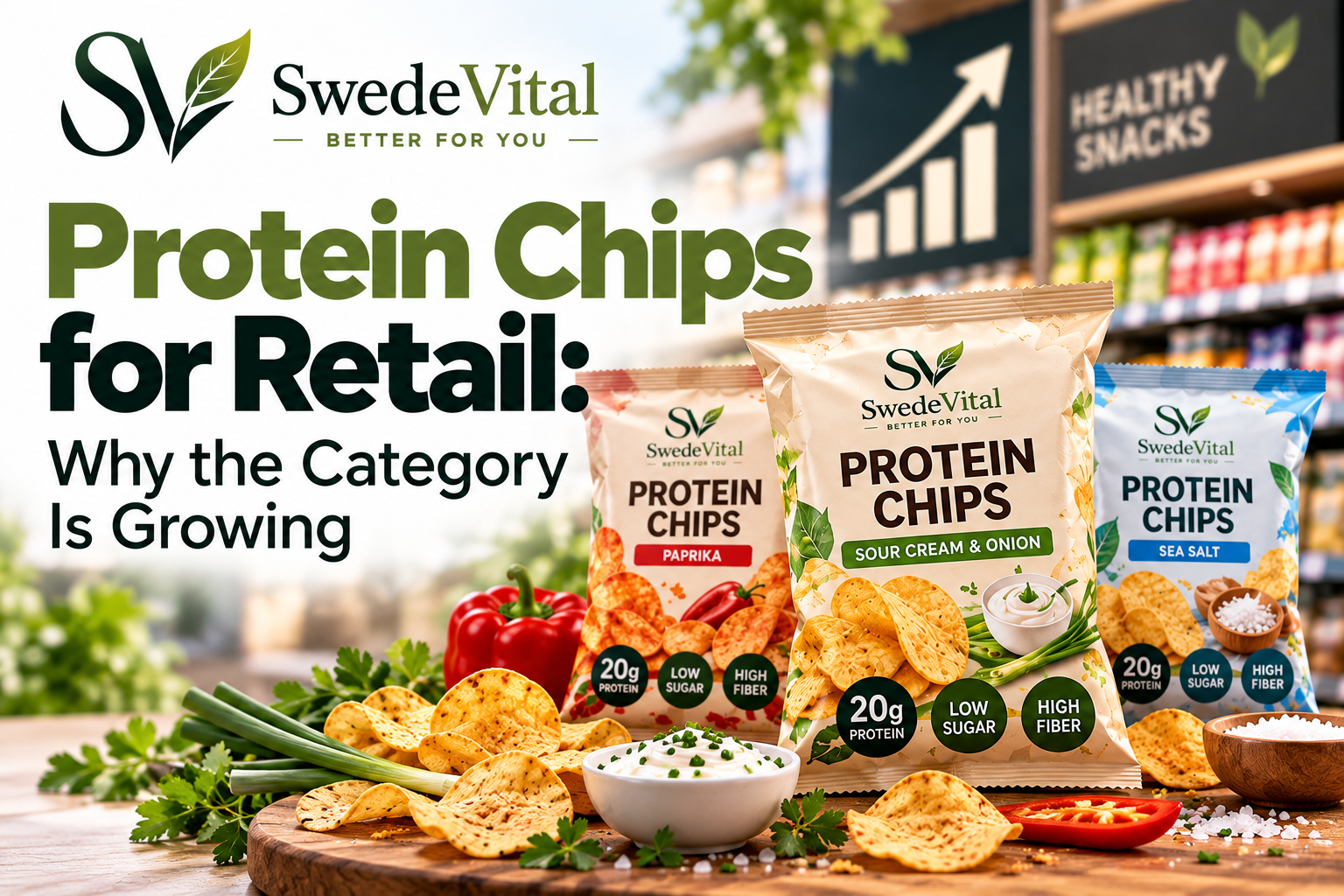
Savoury is where the category is expanding. Options such as protein lentil chips scratch the "crisps" itch while carrying a genuine protein claim, which makes them incremental — they win a shopper who was never going to buy a sweet bar. They travel well, sit happily alongside traditional crisps, and give your fixture a reason to look different from the store across the road.
Protein bites and natural bites
Bite formats bridge the gap between a bar and a treat. Protein bites and natural bites suit shoppers who want something to graze rather than a single dense block, and the small pack size supports a keen impulse price point. They are a good third leg for a fixture once bars and a savoury option are established.
Margin, velocity and shelf life: the three numbers that decide it
Every listing decision in convenience comes down to three linked numbers. Assortment is not the goal — turns are.
- Velocity (rate of sale). A convenience peg is expensive real estate. A product that sells slowly is losing you money even at a high margin. Give a new SKU a defined trial window and a minimum weekly rate of sale before you judge it.
- Cash margin, not just percentage. A 45% margin on a low price can earn less cash per facing than a 35% margin on a premium protein snack. Look at cash profit per facing per week, because that is what pays your rent.
- Shelf life and ambient stability. Better-for-you products with fewer preservatives can carry shorter dates. Confirm the ambient shelf life against your delivery frequency, and avoid anything that forces short-code markdowns you cannot recover.
If a product cannot post an honest answer to all three, it does not belong on a small fixture — no matter how good the story is.
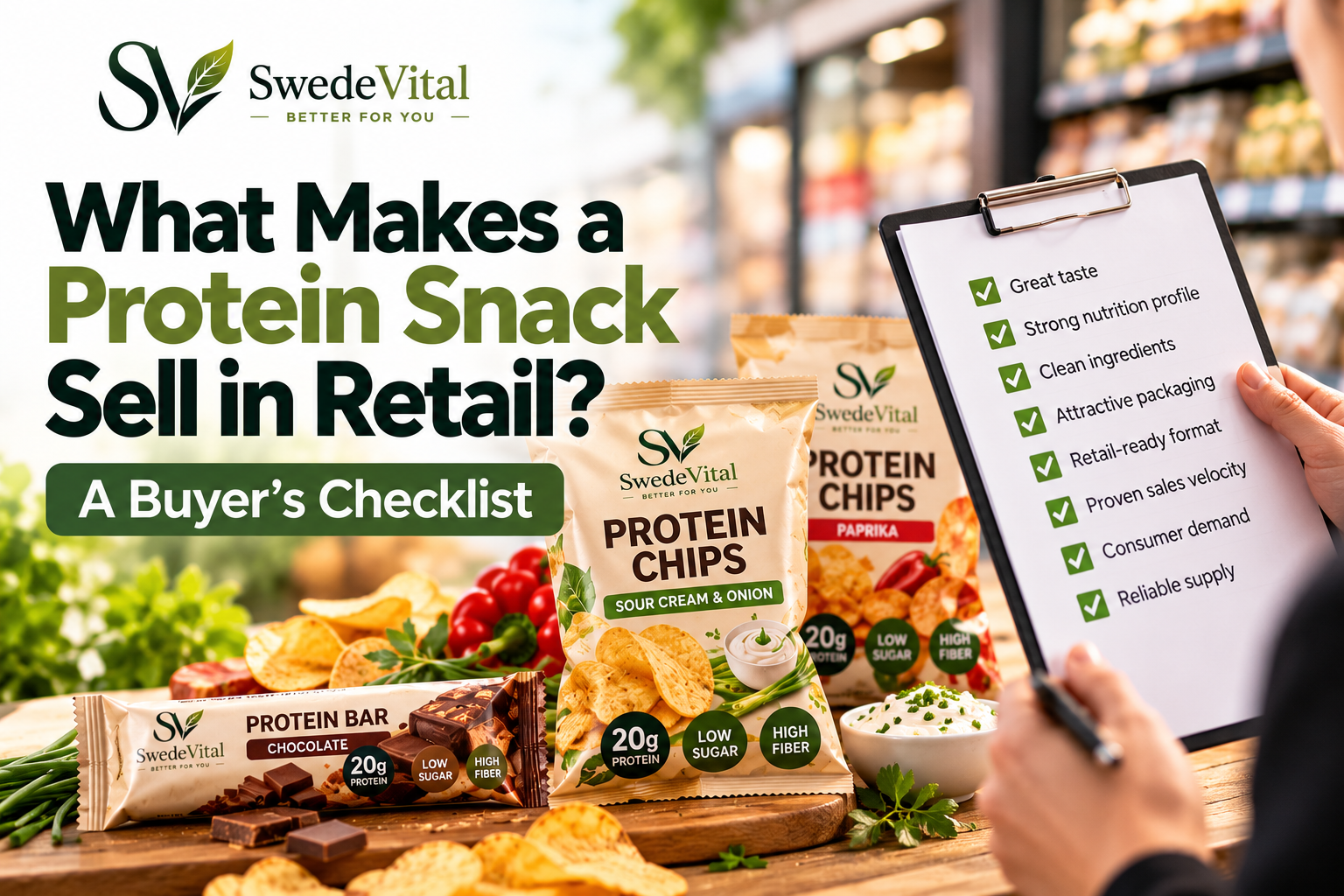
A stocking checklist for protein snacks in convenience stores
Use this as a listing filter before you commit a facing. A strong candidate should clear most of these:
- Grab-and-go, single-serve format that needs no preparation and fits a peg, basket or counter unit.
- A front-of-pack protein claim that is legally compliant and instantly readable at arm's length.
- Clean supporting nutrition — the back of pack does not undo the front.
- Ambient shelf life comfortably longer than your reorder cycle.
- An impulse price that lands inside the shopper's mental "snack" range for your store.
- Healthy cash margin per facing, checked as profit per week, not percentage alone.
- Reliable supply and lead times — an out-of-stock hero is a lost sale and a lost habit.
- A reason to exist next to what you already stock: incremental, not a duplicate.
Merchandising: placement beats assortment
Where you put protein snacks matters more than how many you list. A few principles hold up across store formats.
Meet the shopper at the point of decision. Grab-and-go protein performs near chilled drinks, at the till, or on a dedicated better-for-you bay — wherever the "I need fuel now" thought occurs. Burying it in a health aisle removes the impulse.
Block by need, not by brand. Shoppers hunt for a job to be done ("protein," "low sugar," "savoury") faster than they hunt for a logo. Grouping the fixture by need helps the two-second scan and lifts the whole segment.
Give the claim room to breathe. Avoid over-facing a crowded peg. Fewer SKUs with clean, forward-facing claims out-sell a cluttered wall where every wrapper competes for the same glance.
Let data prune. Review rate of sale monthly, delist the bottom performers without sentiment, and reinvest the space in your proven movers or a tested new entrant. The fixture should get sharper every quarter.
Branded, private label, or both?
For independents and small chains, the question is whether to ride established brands, build a private-label line, or run both. Branded products bring built-in demand and lower merchandising effort — the shopper already knows them. Private label protein snacks trade some of that pull for stronger margin, differentiation the store next door cannot match, and control over the specification and claim.
A pragmatic path is a hybrid: anchor the fixture with one or two branded heroes that pull traffic, then add a private-label or exclusive line for margin and identity. If you go private label, work with a manufacturer that can support you on compliant claims, ambient shelf life and realistic minimums, so the operational reality matches the shelf ambition. This is where a specialist supplier of protein and better-for-you snacks — across bars, protein lentil chips and bites — earns its place: not by widening your range, but by helping you stock the few things that actually turn.
Get the fundamentals right — the right formats, honest claims, disciplined margins and placement at the point of decision — and protein snacks for convenience stores become one of the most dependable better-for-you segments you can run.
Frequently asked questions
What are the best-selling protein snacks in convenience stores?
Protein bars remain the anchor because they are ambient, familiar and low-risk to list. Savoury formats such as protein chips and protein bites are the fastest-growing additions, because they win shoppers who would never buy a sweet bar. The best mix is usually two proven bars, one savoury option and one bite format.
What does "high protein" legally mean on a snack?
In the EU and UK, a "high in protein" claim requires at least 20% of the product's energy to come from protein, and "source of protein" requires at least 12%. Always confirm the claim tier on the specification sheet before listing, so the front-of-pack message is defensible.
How much shelf space should a small store give protein snacks?
Start tight. A focused set of high-velocity SKUs on a well-placed peg or bay out-performs a wide, slow range. Judge each facing on cash profit per week and rate of sale, then reinvest freed space in proven movers rather than adding more variants.
Are protein snacks healthier than regular snacks?
They can be, but it depends on the whole pack, not just the protein claim. Research suggests protein may support satiety, which is why shoppers choose it, but a high-protein snack loaded with sugar is not automatically a healthy choice. Check the back of pack, not only the headline.
Should a convenience store stock branded or private-label protein snacks?
A hybrid usually works best. Anchor the fixture with one or two branded heroes for built-in demand, then add a private-label or exclusive line for stronger margin and differentiation the store next door cannot copy — provided your supplier can support compliant claims and reliable ambient supply.
Vanliga frågor
What are the best-selling protein snacks in convenience stores?
Protein bars remain the anchor because they are ambient, familiar and low-risk to list. Savoury formats such as protein chips and protein bites are the fastest-growing additions, because they win shoppers who would never buy a sweet bar. A strong mix is two proven bars, one savoury option and one bite format.
What does "high protein" legally mean on a snack?
In the EU and UK, a "high in protein" claim requires at least 20% of the product's energy to come from protein, and "source of protein" requires at least 12%. Always confirm the claim tier on the specification sheet before listing, so the front-of-pack message is defensible.
How much shelf space should a small store give protein snacks?
Start tight. A focused set of high-velocity SKUs on a well-placed peg or bay out-performs a wide, slow range. Judge each facing on cash profit per week and rate of sale, then reinvest freed space in proven movers rather than adding more variants.
Are protein snacks healthier than regular snacks?
They can be, but it depends on the whole pack, not just the protein claim. Research suggests protein may support satiety, which is why shoppers choose it, but a high-protein snack loaded with sugar is not automatically a healthy choice. Check the back of pack, not only the headline.
Should a convenience store stock branded or private-label protein snacks?
A hybrid usually works best. Anchor the fixture with one or two branded heroes for built-in demand, then add a private-label or exclusive line for stronger margin and differentiation the store next door cannot copy, provided your supplier can support compliant claims and reliable ambient supply.