Shelf Placement for Protein Snacks: Where Should They Sit in Store?
Kort sammanfattat
Protein snacks sell best across a few deliberate touchpoints: eye-level in the main snacking aisle for planned buys, a grab-and-go or checkout facing for impulse, and a secondary block in the health and sports-nutrition set for mission shoppers. Match placement and format to each shopper's intent rather than chasing one perfect spot.
TL;DR
- Place protein snacks where intent lives - eye-level in the snacking aisle plus grab-and-go and a wellness facing - and use adjacency, signposting and format logic to convert browsing into baskets.
Where protein snacks should sit: the short answer
Effective protein snack shelf placement puts the product where shopper intent already lives: eye-level in the main snacking aisle for planned purchases, a grab-and-go facing near the entrance or chilled food-to-go for impulse, and a secondary block in the health, wellness or sports-nutrition set for shoppers who arrive searching for high protein foods. The aim is not one perfect spot but a small number of well-chosen touchpoints that match how different shoppers decide.
Place protein snacks where the decision happens: impulse zones for unplanned buys, the core snacking aisle for routine restocking, and the wellness set for mission shoppers. Two or three deliberate facings usually beat one crowded one.
Why protein snack shelf placement is a merchandising decision, not an afterthought
Protein snacks sit at the intersection of two fast-growing shopper missions: indulgence made lighter, and functional nutrition. A buyer who treats them as ordinary confectionery loses the shoppers who are actively trading up from crisps and chocolate toward healthy snacks with a nutritional reason to buy. Position matters because these products are usually a considered choice — the shopper reads the front of pack, checks the protein content, and compares. That behaviour needs visibility and a moment to browse, both of which a poor shelf position denies. Getting placement right is one of the cheapest levers a category manager has: it costs no extra stock, only thought, and it can be revised without a single new SKU. It also compounds — a shopper who finds the category once, in a logical place, is far more likely to return to it, so the payoff from a good position accrues over repeat visits rather than a single basket.
The zones every protein snack should compete for
Rather than asking "which aisle?", think in terms of shopper missions. Most stores can justify a protein-snack presence in three or four distinct zones, each serving a different intent and each rewarding a different pack format.
Grab-and-go and front-of-store
Meal-deal fixtures, chilled food-to-go and entrance displays capture the single most valuable protein-snack shopper: the person buying something to eat within the hour. Protein bars and protein bites travel and portion well, which makes them natural fits here. This zone rewards single units and clear, benefit-led signposting over multipacks, because the decision is fast and the shopper rarely doubles back.
The main snacking aisle
This is the anchor. Shoppers restocking the cupboard expect to find snacks here, and a dedicated protein or "better-for-you" block within the aisle signals that the category is real and worth browsing. Group like with like so the shopper can compare formats — bars, protein chips, bites — without hunting across the fixture.
The health, wellness and sports-nutrition set
Mission shoppers who came in for supplements, functional foods or sports nutrition are already primed to buy protein snacks on the same trip. A facing here connects snacks to the wider wellness basket, including functional lines such as creatine or mushroom supplements, and reaches a shopper who is comfortable reading labels and paying for a benefit.
Checkout and impulse
The queue is prime real estate for single-serve, individually wrapped items. A protein bar at the till is a lighter-guilt alternative to the traditional chocolate spinner, and it captures the last-second decision that in-aisle placement can miss. Keep the choice shallow here: one or two hero lines convert better than a crowded caddy, and rotating the featured bar seasonally keeps the position fresh without expanding the space it occupies.
Getting vertical position right: eye level, reach and blocking
Within any fixture, vertical position decides how many shoppers actually see the product. A few durable principles apply:
- Eye level is buy level. Reserve the two shelves at adult eye height for your best-selling and highest-margin protein lines. Slower or trial items can sit above or below without losing the category its shelf presence.
- Block by benefit, then by brand. A vertical block of protein snacks reads as a destination; scattering them among standard snacks makes the category invisible. Within the block, keep a brand or range together so the shopper builds familiarity across visits.
- Face up and keep it full. Protein snacks often carry busy, information-dense packaging. Clean, forward-facing rows let the protein claim do its job at a glance rather than fighting the clutter.
- Mind the line of sight. If a product is positioned as a family or lunchbox option, lower shelves can be an advantage; if it is an adult functional buy, keep it up where the target shopper looks first.
Adjacency and cross-merchandising that lifts baskets
Where a product sits next to matters as much as which shelf it is on. Thoughtful adjacency turns a single purchase into a basket:
- Next to what it replaces. Siting protein bars and chips beside conventional crisps and confectionery captures the shopper mid-trade-up, at the exact moment they are weighing a lighter option.
- Next to what it completes. Near sports drinks, protein shakes or the recovery set, a protein snack reads as part of a routine rather than a treat.
- With functional wellness. Placing protein bites or bars close to functional lines — mushroom supplements, creatine, magnesium — signals a coherent "everyday performance" story and reaches the same considered shopper.
- Seasonal and secondary displays. Gondola ends tied to January health resolutions, back-to-school lunchboxes or summer activity peaks give the category a temporary volume home without disturbing the core planogram.
Signposting: winning the two-second glance
Even perfect placement fails if the shopper cannot decode the shelf quickly. Protein snacks live or die on a two-second glance, so the fixture has to communicate before the pack does. Shelf strips, header cards and simple category signs that read "High Protein" or "Better-for-You Snacking" turn a wall of busy packaging into a navigable destination. This matters more for protein than for most categories because the buying reason is nutritional: the shopper is scanning for a claim, not a flavour. Clear signposting also protects the range from being read as premium-priced confectionery, which invites unfavourable price comparison rather than value-led choice. Keep messaging honest and benefit-led — research suggests shoppers increasingly discount vague health cues, so specific, verifiable claims tend to travel further than superlatives.
Category logic: bars, chips and bites do not all behave the same
Treating "protein snacks" as one undifferentiated block is a common error. Each format has a different job, a different shopper and an ideal position:
- Protein bars are the impulse and on-the-go workhorse — strong at checkout, grab-and-go and in the sports set. Their high category search demand makes them the natural signpost that draws the eye to the whole block.
- Protein and lentil chips compete directly with savoury snacking, so they earn their keep in the main snacking aisle beside crisps, where the trade-up comparison is immediate and visible.
- Protein and natural bites bridge indulgence and function; they suit grab-and-go, wellness adjacencies and lunchbox-oriented lower shelves.
Stocking across formats lets a buyer own more of the fixture and speak to more missions — but only if each format is placed where its shopper actually expects to find it.
Matching protein snack shelf placement to store format
The right answer changes with the channel. Effective protein snack shelf placement in a small convenience store looks nothing like a full-range supermarket set, so start from the space and the dominant mission before you draw a planogram.
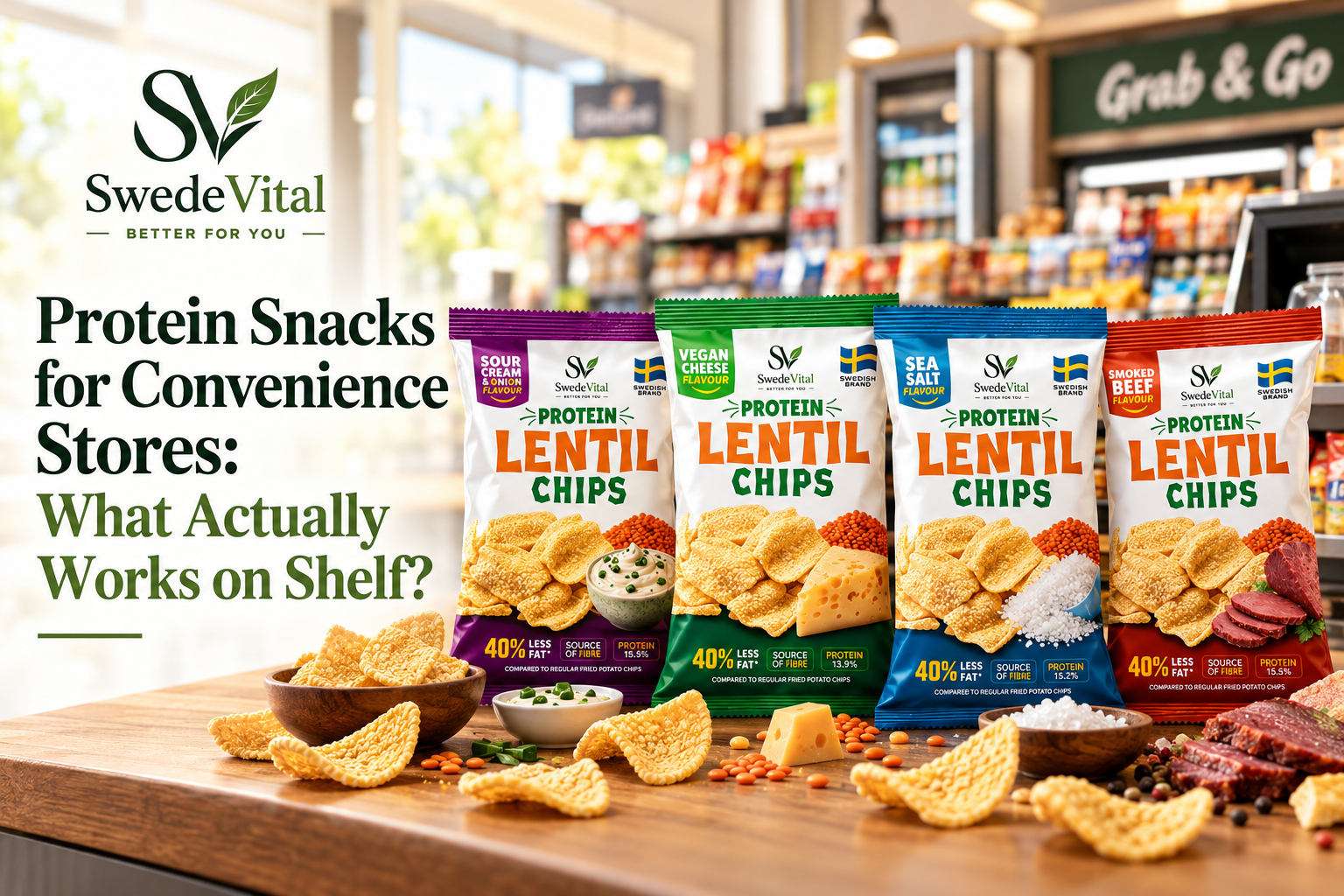
- Convenience and forecourt: prioritise single-serve bars and bites at grab-and-go and checkout; space is tight, so lead with the highest-rotation lines and resist deep ranging.
- Supermarket and hypermarket: build a defined better-for-you block in the snacking aisle, add secondary facings in health and sports nutrition, and reserve a seasonal gondola end for peaks.
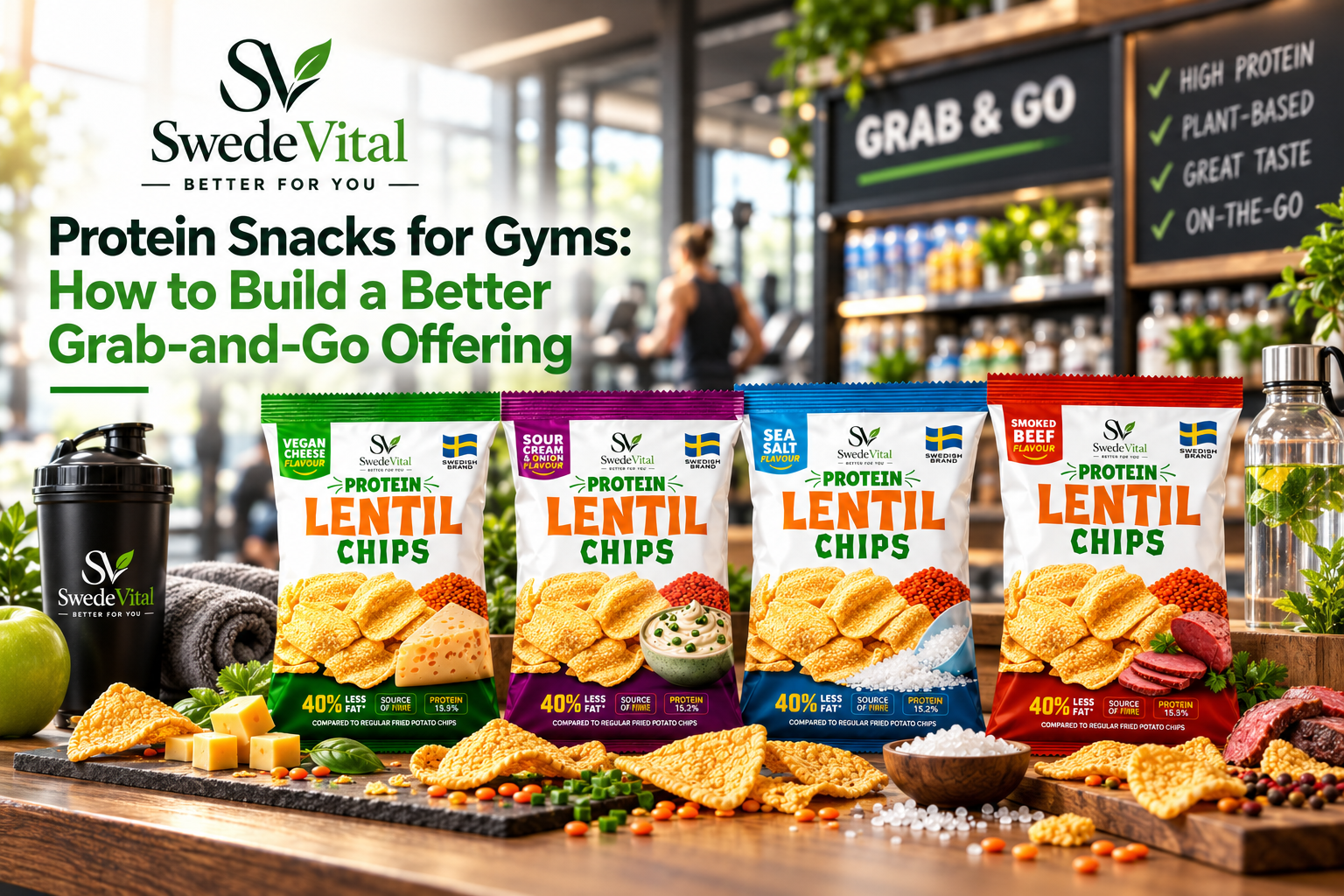
- Health, gym and specialist retail: the wellness and sports set is the hero here; protein snacks belong beside supplements and recovery products, merchandised as part of a regimen rather than a treat.
- Distributor and private-label supply: if you supply retailers, planogram guidance and clear format segmentation help your buyers merchandise the range correctly and protect rate of sale on shelf.
A shelf-placement checklist for buyers
Before signing off a planogram, run through the essentials:
- Is there a clear, blocked protein or better-for-you section rather than scattered facings?
- Are best sellers at eye level, with trial items above or below?
- Does the range appear in at least two missions — for example the core aisle plus grab-and-go or checkout?
- Are formats placed by shopper intent: chips in savoury snacking, bars at impulse, bites across both?
- Is there an adjacency that lifts the basket, such as sports nutrition or functional wellness?
- Is the signposting benefit-led and readable from a distance?
- Are facings full and forward-faced, so busy packaging still communicates?
- Is there a plan for seasonal peaks, from New Year to back-to-school, via secondary displays?
Where SwedeVital fits
SwedeVital manufactures across the formats this guide describes — protein lentil chips, protein and natural bites, and protein bars — alongside a functional-wellness line that spans mushroom supplements, creatine and magnesium. For buyers and private-label partners, that breadth makes it possible to merchandise a coherent protein-and-performance story across several store zones from a single supplier, with format segmentation that supports the placement logic above. The merchandising principles here stand on their own; a well-segmented range simply makes them easier to execute.
Vanliga frågor
Where should protein snacks be placed in a store?
Give them more than one home. The anchor is a blocked, eye-level section in the main snacking aisle for planned purchases, supported by a grab-and-go or checkout facing for impulse and a secondary facing in the health and sports-nutrition set for shoppers looking for high protein foods. The right mix depends on your store format and space.
Should protein bars go at the checkout or in the snacking aisle?
Both, if space allows, because they serve different missions. Protein bars in the snacking aisle catch the planned restock and let shoppers compare formats, while a hero bar or two at checkout captures the last-second impulse as a lighter alternative to confectionery. Keep the checkout choice shallow so it converts quickly.
Do protein snacks sell better in the health aisle or the main snacking aisle?
The main snacking aisle usually drives the most volume because that is where most shoppers expect snacks. The health, wellness and sports-nutrition set adds incremental sales from mission shoppers already reading labels. Wherever possible, run a facing in both rather than choosing one, since they reach different intents.
What should protein snacks be merchandised next to?
Site them beside what they replace and what they complete. Next to crisps and confectionery they catch shoppers trading up to healthy snacks; next to sports drinks, shakes or functional wellness lines they read as part of a routine. Both adjacencies can lift basket size.
How should protein chips be placed differently from protein bars?
Match the format to shopper intent. Protein and lentil chips compete with savoury snacking, so they belong in the main snacking aisle beside crisps where the trade-up is obvious. Protein bars are an on-the-go impulse item that performs at grab-and-go, checkout and in the sports set.
Does eye-level placement really matter for protein snacks?
Yes. Vertical position strongly affects visibility, so eye level should be reserved for best-selling and higher-margin lines, with trial items above or below. Because protein packaging is often information-dense, a full, forward-faced block at eye level also helps the protein claim register in the two seconds a shopper spends scanning.