Why Protein Snacks Fail on Shelf — and What Retailers Can Do About It
Kort sammanfattat
Protein snacks usually fail on shelf for merchandising reasons, not product ones: wrong zone, an unclear on-pack protein benefit, a confusing price-per-gram story, a range that duplicates occasions, or broken availability. Fix placement, legibility, value cues and stock, and most slow sellers recover without changing the product.
TL;DR
- Most protein snacks that fail on shelf are fixed by better placement, a legible protein benefit, a clear value cue, a tighter range and reliable availability — not by changing the product.
The phrase buyers use — protein snacks not selling — usually describes a merchandising failure, not a product failure. When a line stalls, the cause is rarely the recipe. In most stores the very same protein bars and protein bites that sit still in one location move steadily in another. That points to context, not content. Before you delist, separate the two: a genuine product problem repeats everywhere, while a placement or pricing problem is store- and fixture-specific.
Why protein snacks not selling is usually a shelf problem, not a product problem
Category managers tend to interrogate the product first — flavour, texture, formulation — because that is the variable they can send back to the supplier. But the underlying demand is strong and getting stronger. Interest in high protein foods has moved from a niche into a mainstream shopping mission, and shoppers now scan for a protein claim across categories that never used to carry one: breakfast, confectionery adjacencies, and food-to-go. Protein shakes and protein bars trained a generation of buyers to read grams-of-protein the way they read a price. If your shelf does not answer that question in the two seconds a shopper gives it, the sale leaks to a competitor that does.
A slow SKU is a hypothesis, not a verdict. Test the shelf before you test the supplier.
The five reasons protein snacks stall on shelf
Across most retail environments, weak sell-through clusters into a short and repeatable list. Diagnosing which one you have is faster than a range review — and cheaper than a delist.
- Wrong zone. The item is filed in a "healthy" or supplements ghetto instead of sitting in the impulse and food-to-go flow where snacking decisions are actually made.
- Invisible benefit. The pack fails to state protein grams, or buries the claim. In a glance, the shopper cannot tell it apart from an ordinary crisp or a standard candy bar, so the reason to pay more never registers.
- Confusing value math. The price looks high next to a conventional snack, and nothing on the shelf helps the shopper compute price per gram of protein. The product reads as "expensive" rather than "efficient".
- Range cannibalisation. Five SKUs all shout "protein" but serve the same occasion. They split velocity between themselves instead of building one visible block.
- Broken availability. The hero facing is out of stock, or there are too few facings to register as a destination. Two facings of a slow item look like a mistake; a proper block looks intentional.
Diagnose before you delist: a two-minute shelf audit
Walk the fixture as a shopper, not a buyer, and run this checklist. If you answer "no" to two or more, you have a merchandising fix in front of you, not a listing decision.
- Can you read the primary benefit — for example a clear protein figure — from two metres away? If not, the pack is under-working.
- Is the item in the flow shoppers actually walk for snacks, or hidden in a health bay they only visit on a mission?
- Are there enough facings to form a visible block, or is it a lonely single that reads as clearance?
- Does a shelf-edge label translate the price into value — per bar, per serving, or per gram of protein?
- Is the hero SKU in stock right now, and was it in stock last weekend when footfall peaked?
- Do the protein snacks sit near a natural trigger — chilled drinks, protein shakes, a meal deal, or the checkout?
Placement and adjacency: where protein snacks actually sell
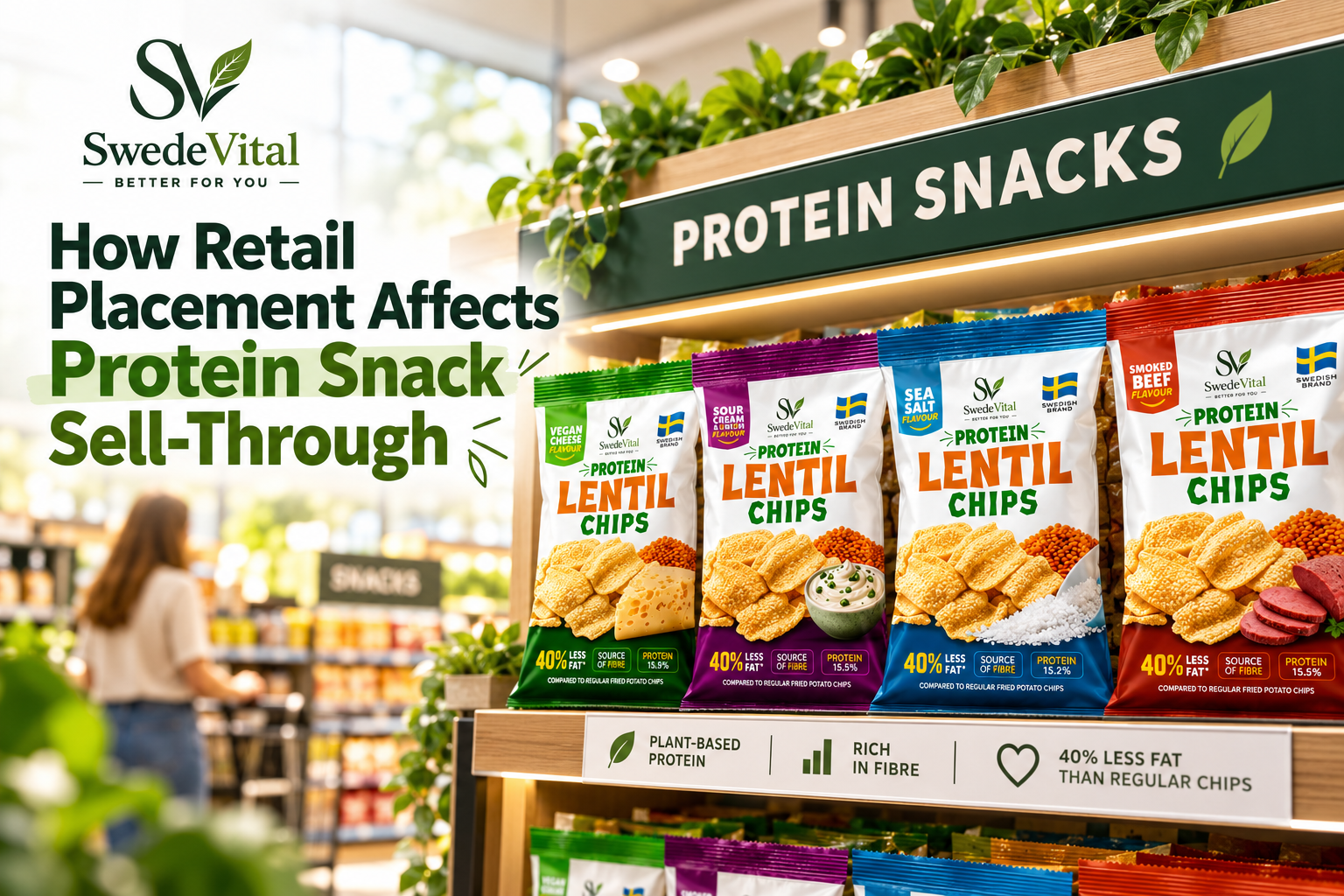
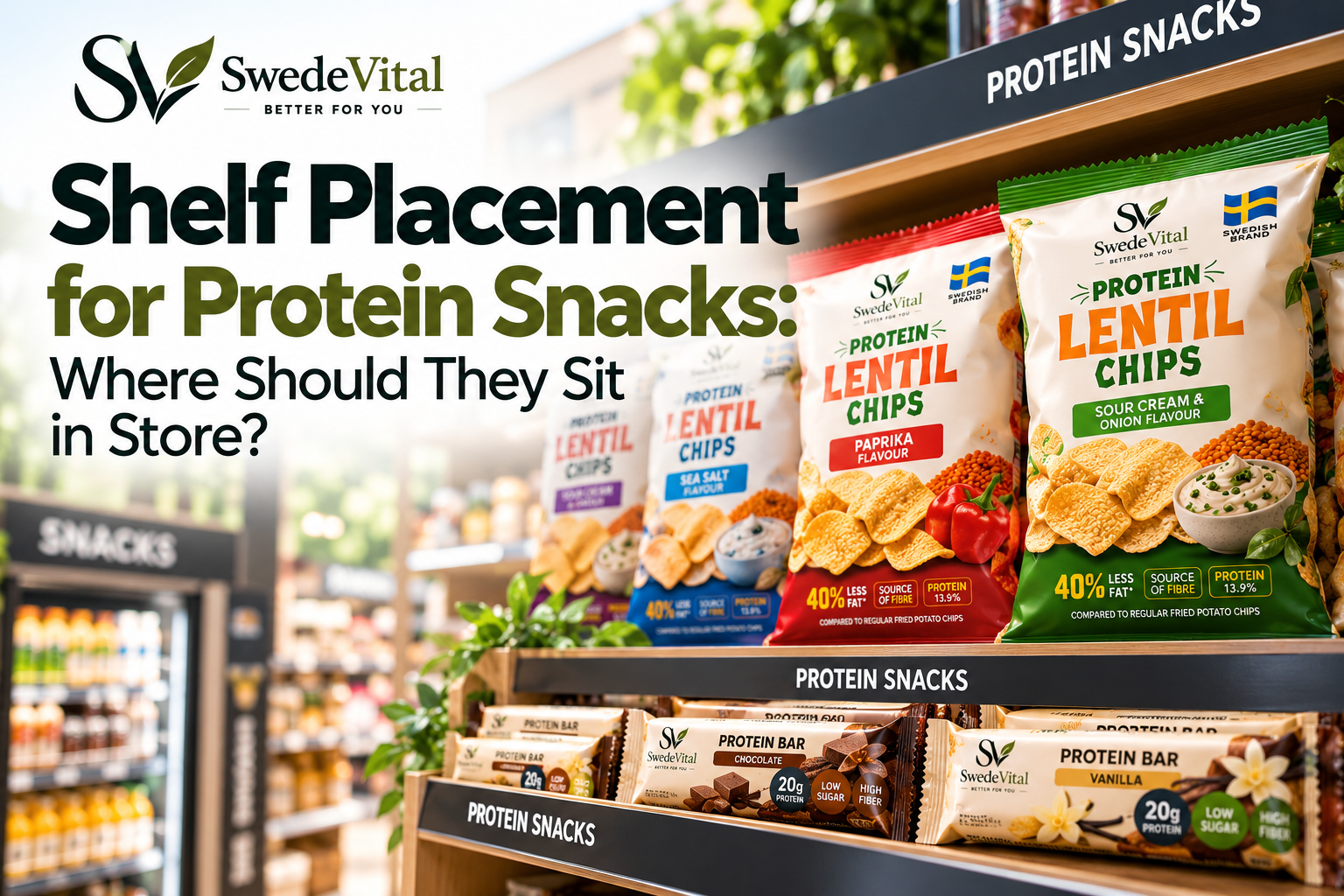
Snacking is a hybrid of impulse and mission, so the strongest planograms dual-site the range. Place a protein bar block in the main snack and confectionery flow to catch the impulse shopper, and run a secondary site near the chilled protein shakes or the food-to-go fixture to catch the planned one. Adjacency borrows intent: a shopper already reaching for a protein shake is in a protein mindset, and a well-placed bar completes a basket they had half-decided on.
Functional-wellness formats follow a different logic. Capsules, dual-extract sprays and gummies are considered purchases, not impulse buys, and they reward a clear, educational fixture with legible benefit language over a scramble for the eye-line. Group these by outcome — focus, recovery, sleep — rather than by ingredient, because most shoppers search for the benefit they want before they search for "Lion's Mane" or "Reishi" by name. Naming the mushroom still matters for the informed buyer, so do both: lead with the outcome, support it with the ingredient.
The price and value story shoppers can actually read
Protein snacks almost always cost more than the conventional snack beside them, and that gap is not the real problem — the missing explanation is. Give the shopper the arithmetic. A shelf-edge that shows protein per pack, or an honest per-serving cue, converts a price objection into a value comparison, which is a contest better-for-you products tend to win. Research suggests protein may support satiety and helps shoppers feel a snack is "doing something", but the on-shelf job is simply to make that trade legible, not to over-claim.
Pack architecture matters just as much. A single-serve impulse pack, a multipack for planned pantry loading, and a trial size each do a different job for a different shopper mission. Stocking only one format forces every mission through one door. If sell-through is soft, check whether you are missing the trial size that lets a curious first-timer say yes cheaply — the format that turns a browse into a habit.
Building a range that reinforces itself instead of splitting velocity
More SKUs is not more sales. A tight, well-differentiated range beats a sprawling one that repeats the same occasion under different wrappers. Map each SKU to a distinct job: a savoury option such as protein lentil chips for the salty-snack occasion; a sweeter format such as protein bars or protein bites for the meal-replacement or treat-with-benefit occasion; and a clean-label natural bites option for the shopper hunting for something less processed. When every facing answers a different question, the block compounds; when three facings answer the same one, they cannibalise.
This is also where own-brand earns its place. When branded protein bars and healthy snacks own the impulse tier, a well-made private-label line can own the value and repeat-purchase tier without cannibalising the premium names above it. Manufacturers such as SwedeVital supply both branded and private-label formats across protein snacks and a broader functional-wellness range, which lets a buyer cover distinct price and occasion tiers from a single supplier rather than fragmenting the planogram across many.
A retailer's checklist for protein snacks not selling
When a performance report flags a slow protein line, work this sequence before you touch the listing:
- Confirm placement. Move the block into the snacking flow and dual-site it near protein shakes or food-to-go.
- Fix legibility. Make sure the protein benefit is readable from two metres and the pack is distinct from conventional snacks around it.
- Add a value cue. Use a shelf-edge label that expresses price as value — per serving or per gram of protein.
- Right-size the range. Cut duplicated occasions; keep one strong SKU per shopper mission and build a real block.
- Guarantee availability. Protect hero facings against weekend stock-outs; a block that empties reads as a discontinued line.
- Give it a fair window. Judge the fixes over a full purchase cycle — typically several weeks — not a single soft week.
- Read the data by occasion. Look at performance by shopper mission and daypart, not by SKU alone, so you fix the cause rather than the symptom.
Do this in order and most "underperforming" protein snacks recover without a single change to the product inside the bag. The ones that still fail after a clean shelf, a clear benefit, an honest value cue and full availability are the ones that have genuinely earned a delist — and now you can prove it.
Frequently asked questions
Why are my protein snacks not selling even though demand for high protein foods is growing?
Rising demand for high protein foods only converts to sales if the shopper can find, understand and value your product on shelf. Most stalls trace to placement in the wrong zone, an unclear on-pack protein benefit, or a price with no value cue — all fixable without changing the product.
Where should protein bars be merchandised in store?
Dual-site them. Put the primary block in the main snack and confectionery flow to catch impulse, and add a secondary facing near chilled protein shakes or the food-to-go fixture to catch the planned, protein-minded shopper. Adjacency to related protein products borrows intent and lifts basket size.
Are protein snacks classed as healthy snacks or as supplements?
Most shoppers treat protein snacks as better-for-you or healthy snacks rather than supplements, so they sell best in the snacking flow with a clear benefit claim — not tucked into a supplements bay. Functional-wellness formats such as capsules and gummies are the exception and suit a dedicated, educational fixture.
How long should I trial a protein snack before delisting it?
Give it a full purchase cycle — often several weeks — with the placement, legibility, value and availability fixes already in place. Delisting after a single soft week usually removes a merchandising problem that was never a product problem, and you lose the learning.
Do protein snacks actually support health goals?
Evidence-led, non-committal claims are safest. Research suggests protein may support satiety and muscle maintenance as part of a balanced diet, but outcomes vary by person and overall intake. Avoid guaranteed-result language on shelf and in marketing; frame protein snacks as a convenient contribution, not a promise.
Should I stock branded or private-label protein snacks?
Both, at different tiers. Let branded lines own the premium impulse tier and a private-label range own the value and repeat-purchase tier so they complement rather than cannibalise. Sourcing both from one manufacturer can simplify the planogram and keep occasion coverage coherent.
Vanliga frågor
Why are my protein snacks not selling even though demand for high protein foods is growing?
Rising demand for high protein foods only converts to sales if the shopper can find, understand and value your product on shelf. Most stalls trace to placement in the wrong zone, an unclear on-pack protein benefit, or a price with no value cue — all fixable without changing the product.
Where should protein bars be merchandised in store?
Dual-site them. Put the primary block in the main snack and confectionery flow to catch impulse, and add a secondary facing near chilled protein shakes or the food-to-go fixture to catch the planned, protein-minded shopper. Adjacency to related protein products borrows intent and lifts basket size.
Are protein snacks classed as healthy snacks or as supplements?
Most shoppers treat protein snacks as better-for-you or healthy snacks rather than supplements, so they sell best in the snacking flow with a clear benefit claim — not tucked into a supplements bay. Functional-wellness formats such as capsules and gummies are the exception and suit a dedicated, educational fixture.
How long should I trial a protein snack before delisting it?
Give it a full purchase cycle — often several weeks — with the placement, legibility, value and availability fixes already in place. Delisting after a single soft week usually removes a merchandising problem that was never a product problem, and you lose the learning.
Do protein snacks actually support health goals?
Evidence-led, non-committal claims are safest. Research suggests protein may support satiety and muscle maintenance as part of a balanced diet, but outcomes vary by person and overall intake. Avoid guaranteed-result language on shelf and in marketing; frame protein snacks as a convenient contribution, not a promise.
Should I stock branded or private-label protein snacks?
Both, at different tiers. Let branded lines own the premium impulse tier and a private-label range own the value and repeat-purchase tier so they complement rather than cannibalise. Sourcing both from one manufacturer can simplify the planogram and keep occasion coverage coherent.