How to Increase Protein Snack Sell-Through Without Constant Discounting
Kort sammanfattat
To increase snack sell-through without constant discounting, move budget from price cuts into five controllable levers: eye-level placement, honest better-for-you signage, sampling, disciplined range curation, and velocity-based reordering. Reserve markdowns for short-dated stock and funded new-product trials, never as the everyday engine of movement.
TL;DR
- Increase protein snack sell-through by investing in placement, signage, sampling, range curation and reorder discipline instead of habitual discounting.
To increase snack sell-through without constant discounting, redirect the budget and attention you would spend on price cuts into five controllable levers: better placement, clear better-for-you signage, sampling and trial, disciplined range curation, and velocity-based reordering. Blanket discounting trains shoppers to wait for the next deal, compresses margin, and rarely builds a loyal repeat base. The retailers who win the protein-snack category treat markdowns as a targeted tool for genuinely slow or date-sensitive stock, not the everyday engine of movement.
This guide is for category managers, buyers and store owners deciding how to move plant-based protein snacks such as lentil chips, protein bites, natural bites and bars at a healthy margin. Every lever below is one you control at shelf level, and none depends on eroding your price.
Why constant discounting quietly erodes a snack category
Promotion has a place, but a permanent-discount habit does structural damage that is easy to miss when the weekly units look fine.
- It resets the reference price. Once shoppers see a product repeatedly on promotion, that becomes the price they consider fair. Full margin then feels like a premium, and units slow the moment the deal ends.
- It compresses margin faster than it lifts volume. A discount deep enough to be noticed is often deep enough to wipe out the incremental profit from the extra units it moves. You end up busier and no richer.
- It hides the real demand signal. When a SKU only sells on deal, you never learn whether shoppers want it at shelf price, which corrupts your next range review.
- It conditions the wrong behaviour. Deal-driven baskets recruit deal-seekers, not category loyalists. The repeat rate you want comes from taste, format fit and habit, not the lowest price of the week.
Discounting is a scalpel, not a hammer: use it to clear short-dated stock or fund genuine trial of a new line, then put it back in the drawer.
How to increase snack sell-through: the five levers that beat price cuts
Sell-through is units sold divided by units received over a period. To lift it you sell more of what you stock, or stock fewer of the wrong things. These levers do both, and they compound because none cannibalises your margin.
1. Placement and facings
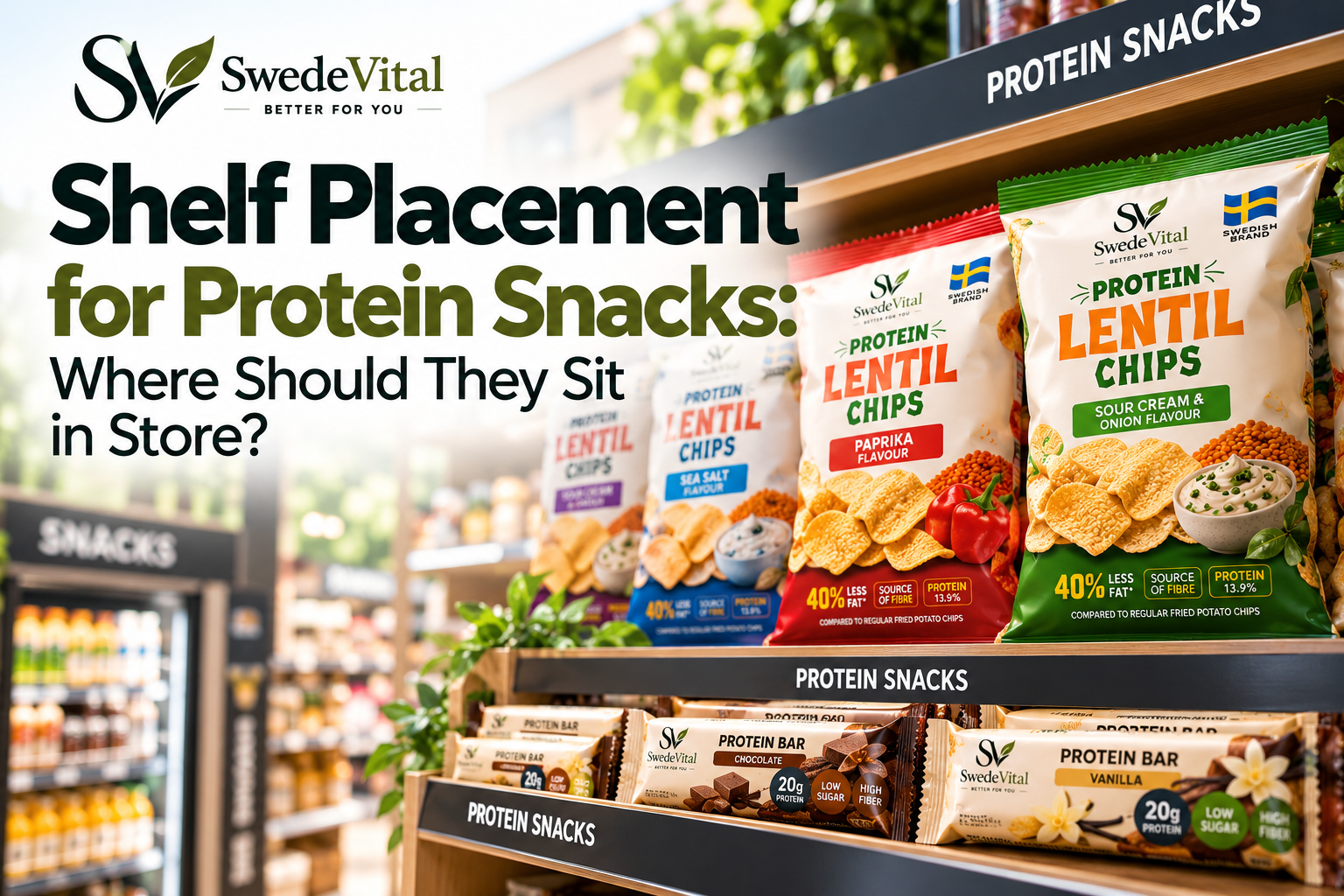
Location outperforms price for impulse-led categories like protein snacks. Prioritise eye-level and waist-level facings over the top and bottom shelves, and give your fastest movers enough facings that they never look picked-over. A secondary sighting near a high-traffic destination, such as chilled drinks or the checkout queue, captures the on-the-go occasion these formats are made for. Keep the protein snacks together as one clear better-for-you block rather than scattering them through general confectionery, so a shopper hunting a higher-protein option finds the whole set at a glance.
2. Signage and the better-for-you cue
Shoppers want a reason to feel good about the purchase, and a small shelf-talker often beats a price flash. Call out the attribute that matters — higher-protein, plant-based or no artificial additives — in plain language. Keep any nutrition or health framing evidence-led and non-committal, for example describing a product as a source of protein rather than promising an outcome. Honest, specific signage lifts conversion at full price because it answers the shopper's question in the two seconds they spend deciding.
3. Sampling and trial
The biggest barrier for a new snack format is that no one knows what it tastes like. Sampling converts curiosity into a first purchase far more efficiently than a discount, and it does so without resetting the price. Where demo hours are limited, single-serve packs at the till, a taste session in a busy trading window, or a bundled trial pack all lower the risk of the first try. Trial is the money to spend instead of a standing markdown.
4. Range curation
More facings of fewer, better SKUs beats a sprawling range where half the line never turns. Rank every SKU by rate of sale and margin, protect the top performers with depth, and be ruthless about the long tail that only sells on deal. A tight range is easier for the shopper to navigate and easier to keep in stock, and availability itself is one of the largest hidden drivers of sell-through.
5. Reorder discipline
Out-of-stocks are silent sell-through killers: a shopper who cannot find the product buys nothing, or buys a competitor. Reorder on velocity, not a fixed calendar, and set par levels high enough on proven movers that a strong week does not create a two-week gap. Consistent availability, week after week, is what turns a trial into a habit.
Merchandising protein snacks where demand already exists
Shoppers arrive with intent you can borrow. Search behaviour shows steady, high-volume interest in queries such as healthy snack ideas, snack ideas and healthy snack recipes — real, standing demand for guidance on what to eat between meals that you can meet at the shelf. Practical ways to convert that curiosity into baskets without touching price include:
- Occasion-based signage. Frame products around when they get eaten, such as a post-workout protein hit, a desk-drawer afternoon snack, or a lunchbox swap. This answers the underlying healthy snack ideas question at the point of decision.
- Cross-merchandising and pairing. Place protein bites or lentil chips next to yoghurt, fruit or coffee to suggest a complete better-for-you moment, which lifts basket size rather than discounting the single item.
- Simple recipe and pairing cards. A short card showing how a protein snack fits a light meal or a lunchbox taps the same appetite that drives healthy snack recipes searches and gives shoppers a reason to buy more than one.
- Seasonal rotation. Refresh the featured idea with the calendar, for example back-to-school lunchboxes or a new-year reset, so the fixture always feels current.
Range architecture: depth versus breadth
The most common assortment mistake is spreading thin across too many flavours and formats in the hope that variety drives sales. In practice, variety without depth just splits demand and creates more ways to be out of stock on the SKUs people actually want. A resilient protein-snack set usually has a clear spine and a small halo:
- Core, always-in-stock heroes. The two or three SKUs that carry the category. Give them the most facings and the tightest reorder discipline.
- Format coverage. One representative of each meaningful occasion, such as a crunchy option like lentil chips, a soft option like protein bites, and a portable protein bar, so the fixture covers the main need states without duplication.
- A rotating trial slot. One or two positions for testing new lines and seasonal ideas, where sampling and short introductory support do the work rather than a permanent discount.
Review the spine on rate of sale and margin, not on how interesting the flavour sounds. If a SKU cannot earn its facing at shelf price, the space is better given to a proven hero.
When a discount is actually the right tool
Cutting price is not banned, just badly overused. There are a few situations where a markdown is the correct, disciplined choice rather than a habit.
- Short-dated or overstocked lines where the alternative is waste. Clearing them protects cash and shelf space.
- Funded new-product trial, ideally a time-boxed offer with a clear end date, so shoppers try the line and convert to full price rather than learning to wait.
- A genuine, occasional event tied to a season or a supplier promotion, run as a distinct moment rather than a rolling default.
The test is simple: a good discount has a defined purpose and an end date. A bad one is the reflex you reach for before building the other levers.
A checklist to increase snack sell-through
Run this review of the fixture before you next reach for a markdown; most stores find several easy wins on the first pass.
- Are your top two or three heroes at eye or waist level with enough facings to never look picked-over?
- Is there a second sighting near a high-traffic destination such as chilled drinks or the checkout?
- Does clear, honest signage name the one attribute that matters to your shopper?
- Have you run sampling or a low-risk trial on any new line in the last quarter?
- Have you cut, or put on notice, every SKU that only sells on deal?
- Are par levels set on velocity so your proven movers are never out of stock?
- Is there occasion-led or pairing signage that answers the healthy snack ideas question at shelf?
- Do your markdowns each have a defined purpose and an end date?
Working with your supplier or private-label partner
Your supplier is a lever too. A manufacturer that understands the category can help you move units with support that does not touch your shelf price, such as sampling stock, shelf-ready signage, format and flavour guidance based on what is turning elsewhere, and reliable lead times that keep your heroes in stock. As a producer of plant-based protein snacks, SwedeVital works with retail buyers, wholesalers and private-label partners on exactly these levers, from range advice to point-of-sale support and consistent supply. The goal is the same whether you stock a brand or build your own label: move units at a margin you can defend, and build a category that keeps selling when nothing is on promotion.
Frequently asked questions
How do I increase snack sell-through without cutting price?
Move spend from discounts into placement, honest signage, sampling, a tighter range and velocity-based reordering. These lift conversion and repeat purchase at full margin, and they compound over time, whereas a discount only works while it runs and resets the price shoppers think is fair.
What are good healthy snack ideas to promote in-store?
Frame products around occasions shoppers already have in mind, such as a post-workout snack, an afternoon pick-me-up or a lunchbox swap. Pairing higher-protein snacks with fruit, yoghurt or coffee via signage answers the everyday healthy snack ideas question at the point of decision.
Does sampling really beat discounting for new snacks?
For unfamiliar formats it usually does. The main barrier to a first purchase is not knowing the taste, and sampling removes that barrier without resetting the price. A funded, time-boxed trial converts curiosity into a habit far more durably than a standing markdown.
How many protein snack SKUs should a store stock?
There is no universal number, but depth on a few proven heroes usually beats breadth. Cover the main occasions with one strong crunchy, soft and portable option, protect them with facings and reorder discipline, and keep a small rotating slot for new lines.
How should I measure snack sell-through?
Track units sold against units received over a defined period, per SKU, alongside margin and availability. A high sell-through built on constant discounting is not a healthy one, so judge rate of sale at shelf price, not on deal.
Vanliga frågor
How do I increase snack sell-through without cutting price?
Move spend from discounts into placement, honest signage, sampling, a tighter range and velocity-based reordering. These lift conversion and repeat purchase at full margin, whereas a discount only works while it runs and resets the price shoppers think is fair.
What are good healthy snack ideas to promote in-store?
Frame products around occasions shoppers already have in mind, such as a post-workout snack, an afternoon pick-me-up or a lunchbox swap. Pairing higher-protein snacks with fruit, yoghurt or coffee via signage answers the everyday healthy snack ideas question at the point of decision.
Does sampling really beat discounting for new snacks?
For unfamiliar formats it usually does. The main barrier to a first purchase is not knowing the taste, and sampling removes that barrier without resetting the price. A funded, time-boxed trial converts curiosity into a habit far more durably than a standing markdown.
How many protein snack SKUs should a store stock?
There is no universal number, but depth on a few proven heroes usually beats breadth. Cover the main occasions with one strong crunchy, soft and portable option, protect them with facings and reorder discipline, and keep a small rotating slot for new lines.
How should I measure snack sell-through?
Track units sold against units received over a defined period, per SKU, alongside margin and availability. A high sell-through built on constant discounting is not a healthy one, so judge rate of sale at shelf price, not on deal.