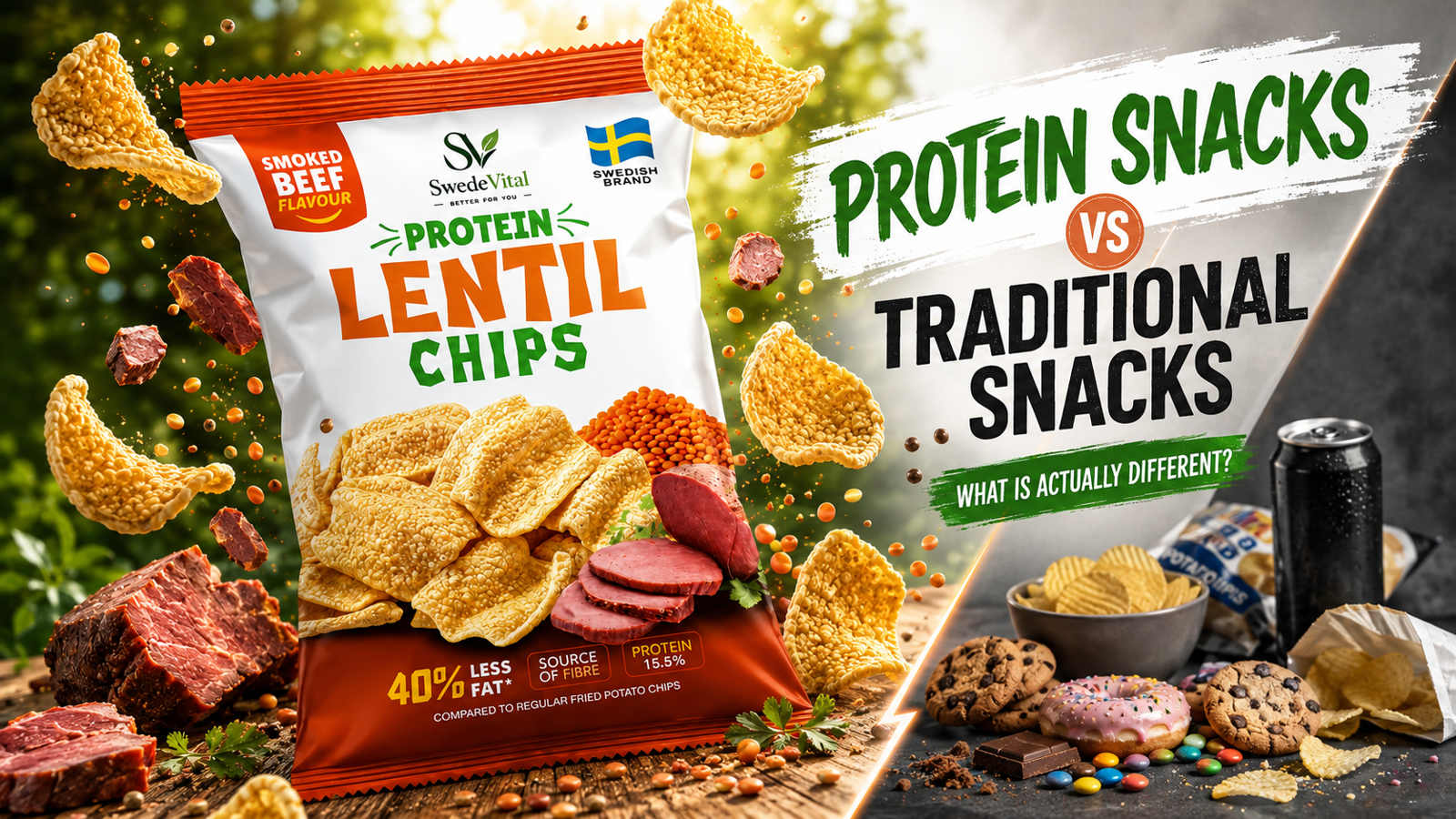
Protein Snacks vs Traditional Snacks: What Is Actually Different?
Kort sammanfattat
A protein snack is a product where protein is a defining nutrient—meeting EU thresholds (12% or 20% of energy), with high protein density, clear source, and intended for planned, goal‑driven consumption, unlike regular snacks that prioritize taste and impulse purchase.
TL;DR
- Protein snacks differ from traditional snacks in protein density, ingredient quality, and shopper intent, impacting pricing, shelf placement, and repeat purchase.
For buyers weighing protein snacks vs regular snacks, the honest answer is this: the meaningful difference is not the word "protein" on the front of pack, but the protein density relative to calories, the ingredient deck behind it, and how the product is intended to be used. A genuine protein snack delivers a labelled, verifiable protein contribution that changes satiety and shopper intent. A conventional snack is built around taste, texture and impulse. For a category manager, that distinction decides adjacency, margin expectation and repeat rate.
Protein Snacks vs Regular Snacks: The Short Answer
A protein snack is a product formulated and labelled so that protein is a defining nutrient, not an afterthought. A traditional snack is formulated primarily for flavour, crunch and low unit cost. The practical consequences for a retailer are different price architecture, different shopper mission (planned health purchase versus impulse), and different claims exposure. Both belong on shelf, but they answer different questions and rarely cannibalise each other cleanly.
The buyer's test is simple: does the protein change how the product is used and priced, or is it a label decoration? If the macros do not shift the value proposition, it is a regular snack in a health costume.
What Actually Makes a Snack a "Protein Snack"?
The term is loosely used, so it helps to anchor it to the labelling framework buyers already work within. Under EU Regulation (EC) No 1924/2006 on nutrition and health claims, a product may be called a "source of protein" only when at least 12% of its energy comes from protein, and "high in protein" only when at least 20% of energy comes from protein. That is a useful, evidence-led line for buyers: a credible protein snack should be able to substantiate the claim it makes, in the country where it is sold.
Beyond the threshold, three attributes separate a real protein snack from a marketing one:
- Protein per 100g and per calorie — density matters more than the absolute grams on a large pack.
- Protein source and quality — plant proteins (pea, lentil, soy) versus dairy (whey, milk protein), and whether the amino acid profile is disclosed.
- What was removed to add it — some products raise protein while quietly increasing salt, saturated fat or sugar to hold the taste. The full nutrition panel tells the real story.
This is where ranges like SwedeVital's protein lentil chips, protein bites and protein bars are worth scrutinising the same way you would any supplier: read the panel, not the flag.
How Protein Snacks and Traditional Snacks Differ in Practice
Set the two side by side and the differences cluster in four areas.
Macronutrient balance
Traditional snacks are typically carbohydrate- and fat-led with minimal protein. Protein snacks rebalance the ratio, which is the whole point. Research suggests protein contributes more to satiety per calorie than carbohydrate or fat, which is why protein formats are marketed around "staying full" rather than pure indulgence. Note the careful framing: this may support appetite management for some shoppers; it is not a guaranteed outcome, and buyers should be wary of any supplier promising one.
Ingredient and processing story
Both categories can be highly processed. A protein claim does not automatically mean "clean label." The differentiator shoppers increasingly look for is a short, recognisable ingredient list with a named protein source. Natural bites and minimally processed options sit at one end; heavily engineered high-protein confectionery sits at the other. Neither is wrong, but they attract different shoppers and different price ceilings.
Shopper mission
Regular snacks are impulse and habit purchases, often decided at the fixture in seconds. Protein snacks skew toward planned, goal-driven buying — pre- or post-activity, meal-bridging, or "better-for-you" substitution. That mission difference is why the two can co-exist without heavy cannibalisation.
Claims and compliance exposure
This is the one traditional snacks rarely carry. The moment a pack says "high protein," it inherits regulatory obligations and heightened scrutiny. For a buyer, that means a protein range should come with substantiation, correct market-specific labelling, and a supplier who can answer for it.
Protein Snacks vs Protein Powder: A Format Decision for Buyers
Shoppers who buy protein snacks often also buy protein powder — it is one of the highest-volume searches in the category — so buyers should understand where each format wins rather than treating them as competitors. Protein powder delivers the lowest cost per gram of protein and maximum flexibility, but it requires preparation and a blender-bottle habit. Protein snacks trade some cost-efficiency for convenience, portion control and portability: no mixing, no measuring, grab-and-go.
For merchandising, that means the two formats serve overlapping shoppers at different moments. Powder is a pantry, planned-replenishment purchase; a snack is an on-the-go or impulse-adjacent purchase. Stocking both lets a store capture the same health-motivated shopper across occasions, and a snack sitting near the checkout or grab-and-go chiller reaches the powder customer at the moment powder cannot serve them.
The Category Economics: Why Buyers Care
Beyond nutrition, protein snacks behave differently on the P&L, and this is usually what settles a listing decision.
- Price architecture — protein formats generally command a higher unit price and, often, a healthier cash margin than commodity snacks, because the shopper is buying a benefit, not just calories.
- Basket role — health-motivated shoppers tend to build larger, more intentional baskets; a strong better-for-you fixture can lift adjacent categories.
- Repeat and loyalty — goal-driven products, when the taste holds up, earn genuine repeat purchase rather than one-time trial.
- Shelf productivity — the risk is over-ranging a trend. A tight, well-chosen protein set usually outperforms a sprawling one.
None of this is a promise of specific sell-through — that depends on your fixture, footfall and market. It is the mechanism behind why the category earns space, and why buyers should test with data rather than assume.
A Buyer's Checklist: Evaluating Protein Snacks vs Regular Snacks
Use this to separate a stock-worthy protein snack from a label-led one before it reaches your fixture.
- Substantiation — can the supplier evidence the "source of" or "high in protein" claim for your market?
- Full panel, not the flag — check protein per 100g and the salt, sugar and saturated fat that came with it.
- Protein source disclosed — is it named (pea, lentil, whey, milk) and appropriate for your shopper (vegan, dairy-free)?
- Ingredient length and recognisability — does the deck match the "better-for-you" promise on front of pack?
- Taste and texture — protein products live or die on repeat purchase; trial the product before you list it.
- Shelf life and format — ambient versus chilled, single-serve versus multipack, and how that fits your fixture.
- Allergen and certification fit — confirm what is declared and audited rather than assumed.
- Private-label and MOQ flexibility — if you want to own the margin, can the supplier support own-brand development?
Run the same checklist across your candidates and the genuine protein snacks separate quickly from the decorated ones.
Where the Trade-offs Are Real
An honest category strategy names the downsides. Protein snacks usually carry a higher price, which can slow trial in value-led stores. Some formulations sacrifice taste for macros, and taste failures kill repeat purchase faster than anything. "High protein" can also mask a product that is still high in calories, sugar or salt — a health halo, not a health food. And over-ranging a trending category ties up shelf that a tighter set would use better. Weighing protein snacks vs regular snacks well means treating protein as one input into a value judgement, not a guarantee of rotation.
Frequently Asked Questions
Are protein snacks actually healthier than regular snacks?
Not automatically. Protein may support satiety and can make a snack more filling per calorie, but a "high protein" product can still be high in sugar, salt or saturated fat. The full nutrition panel — not the front-of-pack claim — decides whether a specific product is a better-for-you choice.
Is protein powder better than protein snacks?
They serve different jobs. Protein powder gives the lowest cost per gram of protein and full flexibility but needs preparation. Protein snacks trade some cost-efficiency for convenience, portion control and portability. Many shoppers buy both, so stocking each captures the same health-motivated customer across different occasions.
What legally counts as a "protein snack" in the EU?
Under EU Regulation (EC) No 1924/2006, a product can claim "source of protein" when at least 12% of its energy comes from protein, and "high in protein" when at least 20% does. Suppliers must be able to substantiate the claim for the market where the product is sold.
Do protein snacks sell well at retail?
Better-for-you and high-protein formats have grown as shopper demand for functional snacking has risen, and they typically command a higher unit price than commodity snacks. Actual sell-through depends on your fixture, footfall, pricing and range discipline, so test with data rather than assuming a fixed result.
Plant-based or dairy protein — which should I stock?
It depends on your shopper base. Plant proteins (pea, lentil, soy) suit vegan and dairy-free demand and broaden inclusivity; dairy proteins (whey, milk) are well established with performance-focused shoppers. Many buyers carry both. What matters most is that the source is named and the taste holds up to repeat purchase.
How do I avoid over-ranging the category?
Start with a tight, well-differentiated set covering the main missions — a chip-style savoury option, a bar, and a bite-style format — then let data expand it. A focused fixture usually delivers better shelf productivity than a sprawling one built on trend enthusiasm.
Related reading
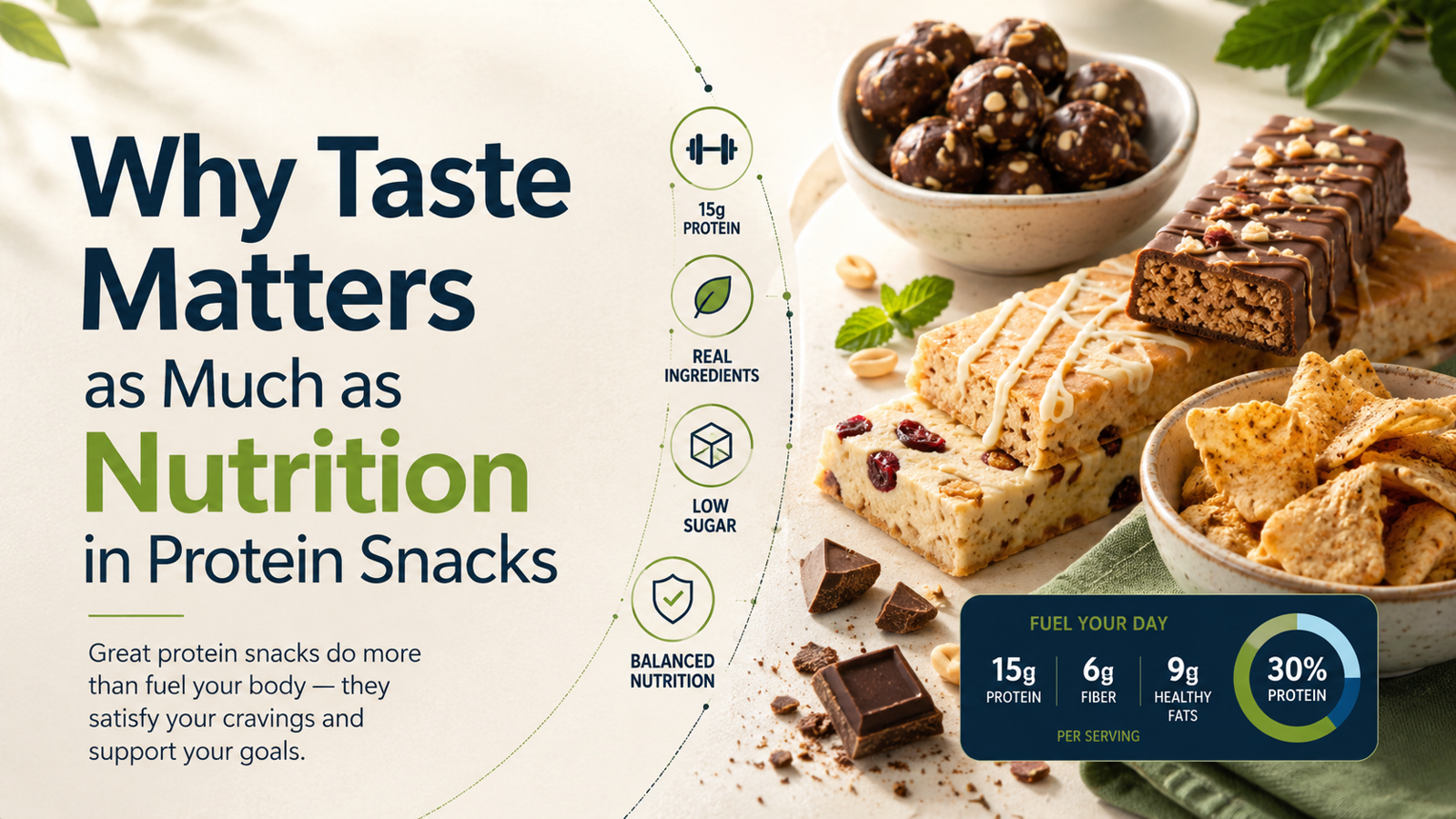
- taste matters as much as nutrition
- how buyers choose protein snack brands
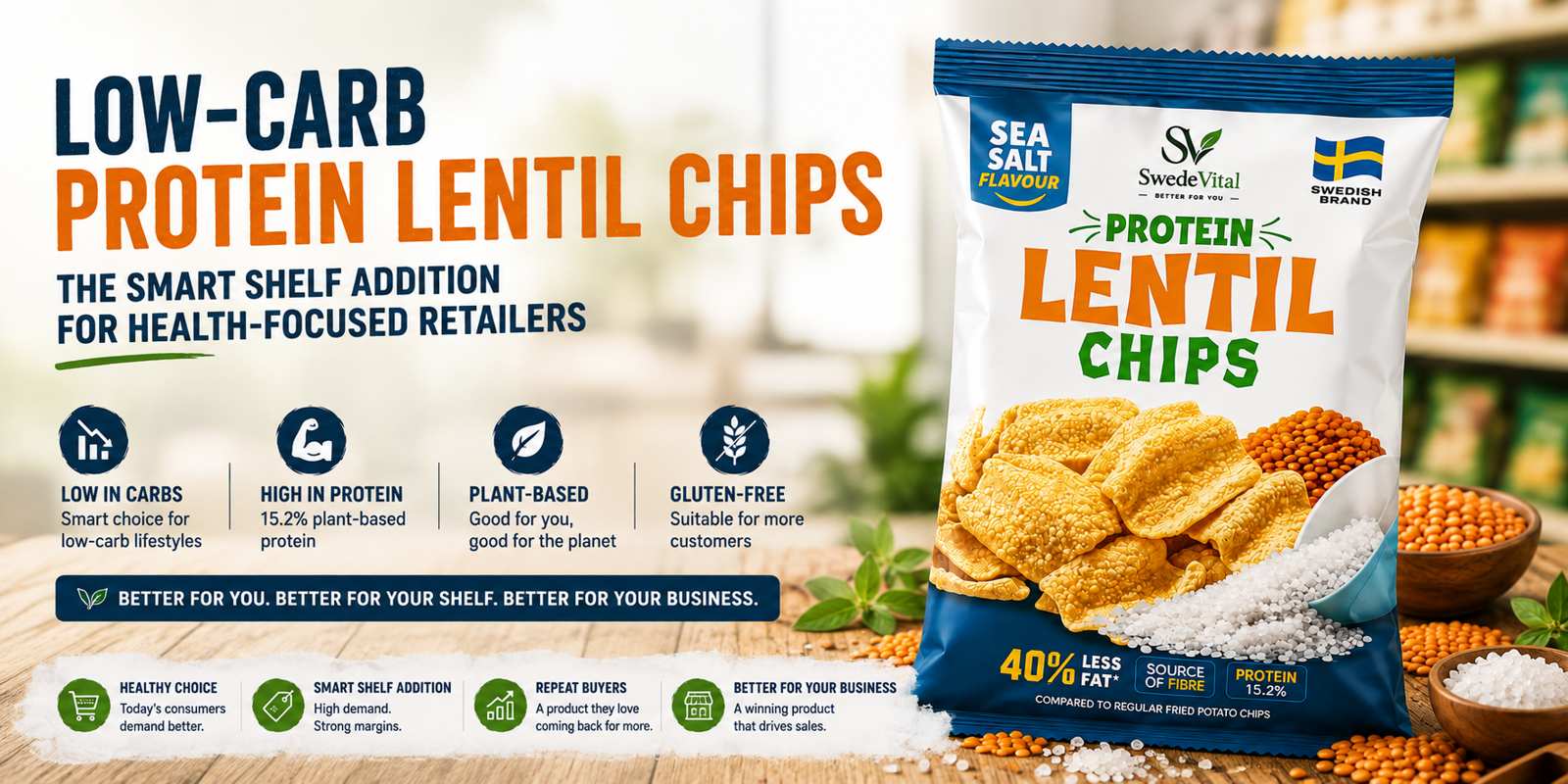
- low‑carb protein lentil chips example
- protein bites vs granola bars
Sources
- Does a Higher Protein Diet Promote Satiety and Weight Loss Independent of Carbohydrate Content? An 8-Week Low-Energy Die
- Regulation (EC) No 1924/2006 of the european parliament and of the council of 20 December 2006 on nutrition and health c
- Ensuring compliance: A review of EU regulations and standards for incorporating legume and legume by-product proteins in
- How to Understand and Use the Nutrition Facts Label - FDA
- 15 Cheapest Sources of Protein: High Protein Foods Ranked by Cost Per Gram – Easy Protein®
- 12 High-Protein Snacks for on the Go - GoodRx
Vanliga frågor
What EU thresholds must a snack meet to be called a source of protein?
Under EU Regulation (EC) No 1924/2006, a snack can claim "source of protein" if at least 12% of its energy comes from protein, and "high in protein" if at least 20% of energy comes from protein.
How does protein density affect a snack’s value proposition?
Higher protein density per calorie increases satiety and shifts the product from impulse to planned, goal‑driven buying, allowing retailers to charge a premium and achieve better margins.
Can a snack be labeled as high protein but still be unhealthy?
Yes. Some products raise protein while adding salt, saturated fat, or sugar to maintain taste. The full nutrition panel must be reviewed to assess overall healthfulness.
Why should retailers stock both protein snacks and protein powder?
Protein powder offers cost‑efficient protein and is a pantry staple, while protein snacks provide convenience, portion control, and grab‑and‑go appeal, capturing the same health‑motivated shopper at different moments.
What are the main differences in shopper mission between protein and traditional snacks?
Traditional snacks are impulse, habit purchases decided quickly at the fixture, whereas protein snacks are planned, goal‑driven purchases for pre‑ or post‑activity, meal‑bridging, or better‑for‑you substitution.