How Convenience Stores Can Increase Snack Basket Value With Protein Products
Kort sammanfattat
Protein products lift convenience snack baskets by trading shoppers up to higher-margin items and adding a second purchase. Build a small set covering bars, savoury chips, bites and chilled drinks across clear price tiers, then dual-site it near the till and chiller with honest shelf cues to grow basket value.
TL;DR
- A tightly edited protein set spanning bars, savoury snacks, bites and chilled drinks across clear price tiers, dual-sited for impulse and mission shoppers, is one of the most reliable ways to grow convenience snack basket value.
Protein snacks are one of the most reliable ways for convenience stores to lift snack basket value, because they pull a shopper who is willing to trade up from a standard confectionery or crisp purchase to a higher-priced, benefit-led choice. Winning at protein snacks convenience retail is not about bolting a few protein bars onto an existing rack. It is about building a small, well-edited set that covers real grab-and-go moments, price tiers and formats, then merchandising it where both impulse shoppers and mission shoppers will see it.
For a buyer or category manager, the opportunity is simple to state and harder to execute: the same footfall can generate a larger basket if the fixture gives people a reason to add a second item, or to swap a low-margin snack for a premium one. This guide sets out how to choose the range, structure pricing, place the products and cross-sell them without over-ranging a small store.
Why protein is a basket-builder, not just another SKU
Mainstream snacking is a habit-driven, low-consideration purchase. Protein products behave differently. They attract a shopper who has already decided they want a benefit — fuel before or after training, something more filling than crisps, or a treat they can feel better about. That intent tends to support a higher unit price and a healthier gross margin than everyday confectionery, which is exactly what “basket value” depends on.
Three shopper behaviours make protein a strong candidate for convenience:
- Trade-up. A shopper reaching for a snack can be nudged toward a higher-priced protein option positioned in the same eyeline.
- Add-on. Protein pairs naturally with a chilled drink or water, turning a single-item visit into a two- or three-item basket.
- Mission repeat. Commuters, gym-goers and shift workers who find a format they like tend to come back for it, which builds predictable rate of sale.
None of this requires a large fixture. A tightly chosen set of the right formats, priced across clear tiers, usually outperforms a sprawling wall of near-identical bars.
What your shoppers are actually searching for
Search behaviour is a useful proxy for what convenience shoppers already want, and it points to a clear split between research and ready-to-buy intent. Interest in high protein foods and healthy snacks is overwhelmingly informational — people are learning what to eat and comparing options before they commit to a brand. Interest in protein bars and protein shakes, by contrast, skews transactional: those shoppers largely know the format they want and are close to a purchase.
For a convenience range, the implication is practical:
- Stock the recognisable, ready-to-buy formats first — bars and chilled drinks — because that is where purchase intent is highest.
- Use clear on-pack and shelf cues (protein content, plant-based, lower sugar) to reassure the larger group who are still deciding what “healthy” looks like for them.
- Do not assume every shopper is an athlete. The bigger audience is everyday buyers looking for a more filling, less sugary snack, not competition-level supplementation.
Building a protein range that lifts basket value
The strongest ranges in protein snacks convenience retail are built around shopper moments, not around brands. A simple, robust framework is to make sure the fixture answers three occasions: something to eat before or after activity, something that replaces or bridges a meal, and something that works as a better-for-you treat. If a format does not clearly serve one of those, it is a candidate to cut.
Formats worth considering
A balanced convenience set usually spans dry snacks and chilled drinks so you capture both hunger and thirst missions:
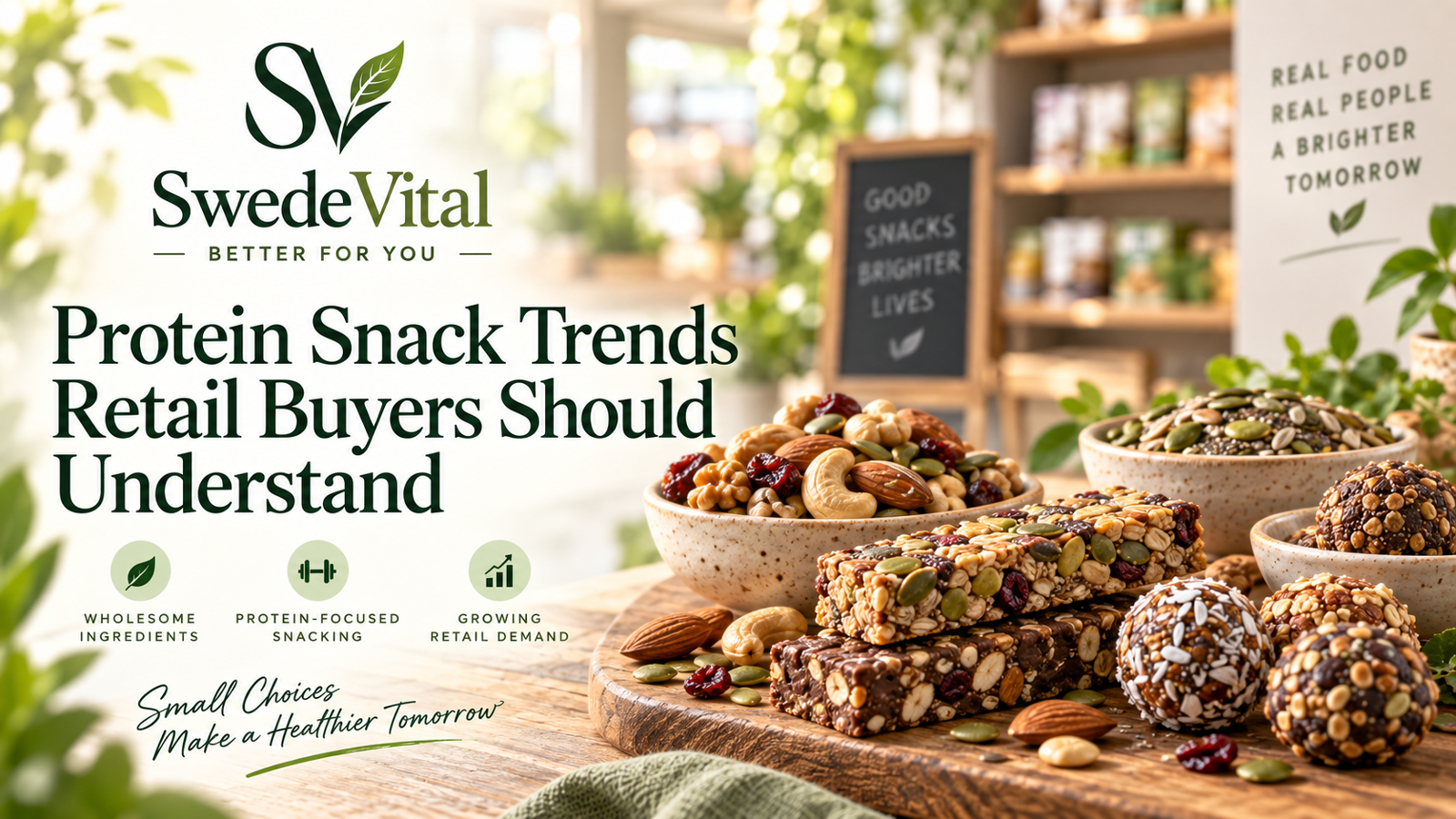
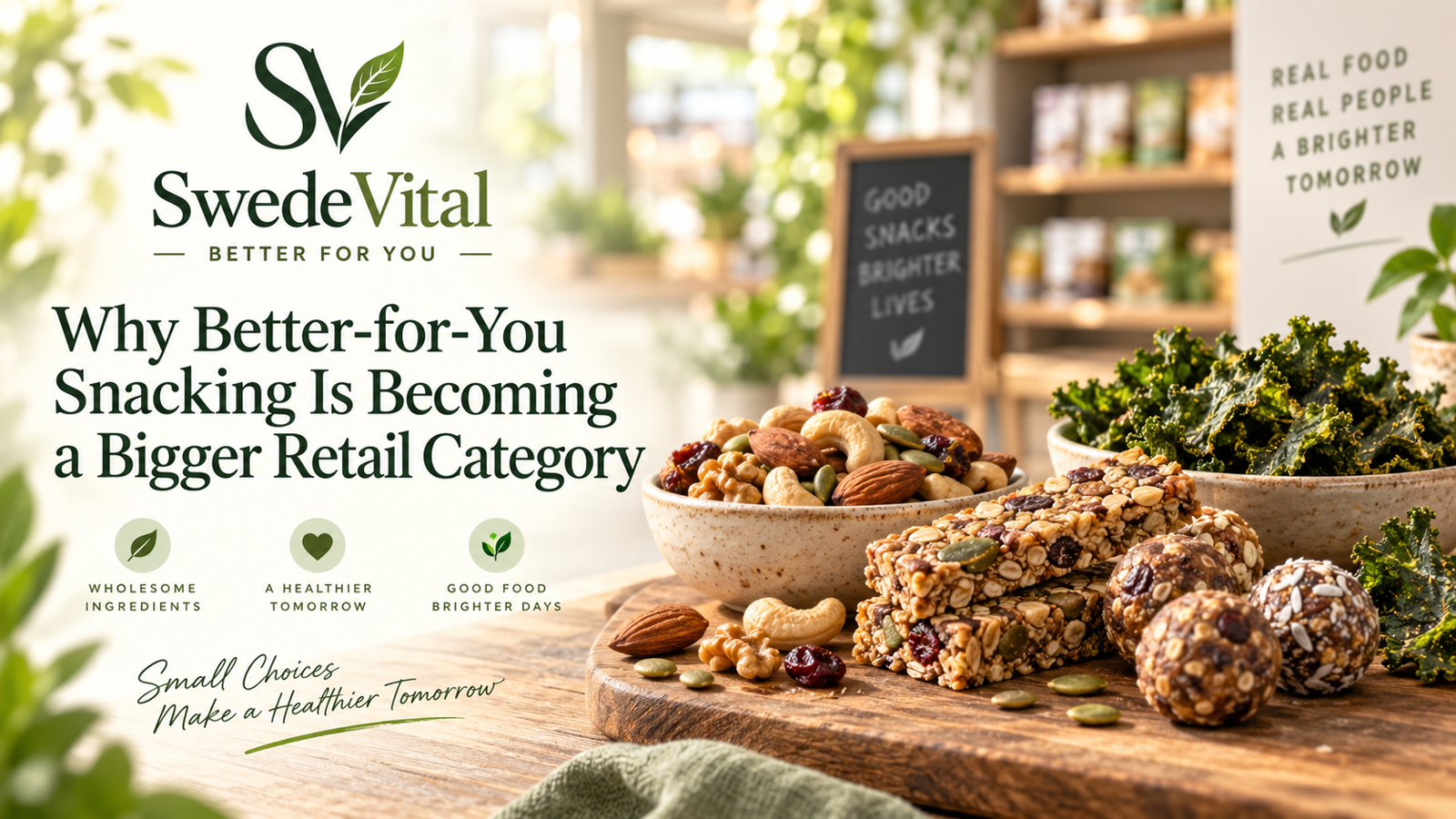
- Protein bars — the anchor format for grab-and-go, with the clearest purchase intent.
- Protein chips, such as protein lentil chips — a savoury alternative that trades shoppers up from standard crisps.
- Protein and natural bites — smaller, shareable or single-serve formats that suit lighter snacking and impulse.
- Chilled protein shakes and ready-to-drink options — high-impulse, easy to cross-sell, and strong for post-gym missions.
- Functional add-ons — a small, curated selection where there is genuine local demand (covered below).
SwedeVital's plant-based line — protein lentil chips, protein bites, natural bites and protein bars — is designed to cover this savoury-plus-sweet spread, which matters because a fixture built on bars alone leaves the savoury trade-up shopper unserved.
Price tiers and margin
Basket value is driven as much by architecture as by absolute price. A useful discipline is to run at least two, ideally three, tiers:
- An opening price point that removes the risk of a first trial.
- A core tier where most volume and margin should sit.
- A premium tier that lifts the average transaction value and signals quality across the fixture.
Rather than fixing prices centrally in this article — they vary by market, format and supply terms — the principle to hold is that the presence of a visible premium option raises what shoppers perceive as normal, which supports trade-up across the set.
Merchandising for protein snacks convenience retail
Range choices only convert if placement is right. Protein is bought on both mission and impulse, so it benefits from appearing in more than one location. The single most common mistake is to bury protein in a “health” bay that mission shoppers seek out but impulse shoppers never pass.
The goal is for a shopper who came in for a drink to leave with a drink and a bar, and for a shopper who came in for a bar to leave with a bar and a drink.
Placement principles that tend to hold in convenience:
- Put chilled protein drinks in the main chiller, adjacent to water and sports drinks, not isolated in a separate section.
- Give bars and bites a secondary siting near the till or the food-to-go zone, where impulse decisions are made.
- Keep a consistent, signposted block for shoppers on a health mission, so the research-minded buyer can find the full range quickly.
- Use clear, honest shelf cues — protein content, plant-based, lower sugar — so the fixture does the explaining for time-poor shoppers.
Turning single items into bigger baskets
Once the range and placement are set, the fastest lever on basket value is deliberate cross-sell. Convenience shoppers respond to obvious, low-effort pairings rather than complex promotions.
- Meal-deal style pairings that combine a protein snack with a drink at a modest saving encourage the second item.
- Adjacency — placing bars beside chilled protein shakes and water — makes the pairing self-evident without any signage at all.
- Simple signage at the fixture and till that names the occasion (“post-gym”, “afternoon slump”) helps shoppers self-select.
- Front-of-store visibility during peak commuter windows, when the trade-up-and-add-on shopper is most present.
The aim is not to discount your way to volume; it is to make the larger basket the easy, default choice.
Where functional wellness fits
Beyond snacking, there is growing interest in functional products — for example mushroom formats such as Lion's Mane, Reishi, Cordyceps and Turkey Tail, as well as creatine and magnesium sleep gummies. These can broaden a basket and attract a repeat, higher-value shopper, but they behave differently from impulse snacks: they are considered purchases that usually need education and a settled local demand before they earn shelf space.
Treat this line as a small, curated adjacency rather than a core convenience play. Research suggests some functional ingredients may support areas such as focus, recovery or sleep, but claims should always be evidence-led and non-committal — avoid any promise of guaranteed outcomes, and follow local rules on what may be stated on shelf. For most convenience stores, a tight, clearly labelled selection tested in a single location is the sensible way to learn whether the demand is there.
A protein snacks convenience retail stocking checklist
Use this as a quick screen before committing shelf space to any protein line:
- Does the set cover all three moments — activity, meal-bridge and better-for-you treat?
- Are both savoury and sweet formats present, so you capture the crisp-swap shopper as well as the bar buyer?
- Is there a chilled protein option in the main drinks chiller for add-on and post-gym missions?
- Do you have clear price tiers — an opening point, a core and a premium — to lift average transaction value?
- Is the range dual-sited — a signposted block plus an impulse siting near the till?
- Are shelf cues honest and specific about protein, sugar and dietary claims?
- Have you set a review point to cut slow lines and reinvest the space in proven performers?
The last point matters most. A protein fixture is not a set-and-forget planogram; disciplined review of rate of sale is what keeps basket value climbing rather than plateauing.
Common mistakes to avoid
- Over-ranging. Too many near-identical bars confuse shoppers and starve your best sellers of facings.
- Single format. Bars-only fixtures ignore savoury trade-up and chilled add-on demand.
- Wrong bay. Hiding protein away from impulse traffic caps it at mission shoppers only.
- No premium tier. Without a visible top price, there is nothing to trade shoppers up toward.
- Set-and-forget. No review cadence means dead SKUs occupy space that better lines could earn back.
Handled well, a compact protein set is one of the most dependable basket-value tools available to a convenience store: it trades shoppers up, adds a second item to the basket and brings mission shoppers back on a predictable cycle.
Vanliga frågor
Are protein snacks profitable for convenience stores?
They can be, because protein products typically carry a higher unit price and healthier margin than everyday confectionery, and they trade shoppers up while encouraging a second, add-on purchase. Profitability depends on right-sizing the range, using clear price tiers and reviewing rate of sale to cut slow lines.
What protein snacks sell best in convenience retail?
Recognisable, ready-to-buy formats tend to perform first — protein bars and chilled protein shakes have the highest purchase intent. Savoury options such as protein lentil chips capture shoppers trading up from standard crisps, while smaller bites suit lighter, impulse-led snacking.
How many protein SKUs should a small convenience store stock?
Fewer than most buyers expect. A tightly edited set that covers activity, meal-bridge and better-for-you-treat moments, spans savoury and sweet formats, and includes a chilled option usually outperforms a large wall of near-identical bars that dilutes facings and confuses shoppers.
Where should protein snacks be placed in a convenience store?
Dual-site them. Keep chilled protein drinks in the main chiller beside water and sports drinks, give bars and bites an impulse siting near the till or food-to-go zone, and maintain a signposted block so health-mission shoppers can find the full range quickly.
Are high-protein snacks actually healthy?
It depends on the product and the shopper's wider diet. Research suggests higher-protein, lower-sugar snacks may support satiety compared with standard confectionery, but claims should stay evidence-led and non-committal. Honest shelf cues about protein and sugar content help shoppers judge what fits their needs.
Do protein bars or protein shakes sell better at convenience?
Both serve different missions, which is why stocking them together works. Bars are the anchor grab-and-go format, while chilled protein shakes drive impulse and post-activity purchases. Placing them adjacent to each other and to water makes the pairing self-evident and grows the average basket.